May 13, 2015

Advice to Entrepreneurs and Job Applicants

I served as a speaker and panelist at the International Biz-Tech Forum at the University of Washington on April 4, 2015. Organized by the Technology and Business Association at the University of Washington (TBAUW), the primary purpose of the event was to help students gain experience and knowledge in both academic and industrial fields in order to prepare themselves after they graduate and enter the job market. While my presentation covered a variety of topics including the risk and rewards of entrepreneurship, operational and financial strategies for early-stage companies, and recommendations for those planning to enter the job market, there are some aspects of my presentation that I wish to discuss in this post.

Photo: In-Between
Photography and TBAUW
It is important that would-be entrepreneurs understand the sacrifice involved in creating and building a business. I believe many people enter entrepreneurship for three reasons: (1) Be their own boss, (2) be in creative control of their service or product, and (3) the opportunity to make a lot of money. Whether I am advising entrepreneurs or investing in their dream to launch a business that will provide exceptional customer service, create a product or service of the highest quality, and build shareholder value, most entrepreneurs fail if making a lot of money is any part of their motivation to create a start-up. Being monetarily-motivated can lead to a grave consequence for an entrepreneur.

Quite simply, the passion and sacrifice required in building a business rarely corresponds to the monetary results entrepreneurs are seeking. Sure, most tech entrepreneurs desire to build the next billion dollar empire, but the reality is most businesses fail within the first few years of its existence.

Many new or would-be entrepreneurs seek my advice and/or financial support. While the individual thinks they are submitting their business (or concept thereof) for my advice or consideration, it is often difficult to determine if their idea is a hobby or a business that will generate sustainable revenue. During my presentation, I advised the attendees to contemplate the following questions if they are considering starting their own enterprise:
  • Why you (and your idea) and why now?
  • Who are your customers?
  • How will people know about you?
  • How will you make money?
  • How will you retain customers, while at the same time, grow your business?
  • How will you achieve and sustain profitability?

Photo: In-Between
Photography and TBAUW
This led me to another important point of my presentation: "HAVE A PLAN!!!" For reasons that I have yet to understand, many entrepreneurs whom I meet do not have a business plan nor do they plan to draft one. A business plan is not only necessary if the owners are seeking financial backing from investors, a business plan provides a greater value by serving as a road map for each and every individual involved with the company. For example, every one of my colleagues at ROI3, Inc., irrespective of their place on the company's organizational chart, is presented with a copy of the latest draft of our business plan and he or she is given the opportunity to provide critical feedback. I use the word 'draft' deliberately since a business plan is always evolving.

I subsequently explained to the attendees the requirement of forming a team to build a business that will produce revenue and achieve profitability. It is important to note that the team is not limited to employees only, but it consists of mentors and advisors, family members, and friends. In addition to emphasizing the requirement of forming a team to build a company of value, my slide titled "It Takes a Team" emphasized the need to "surround yourself with people smarter than you." The ability of every entrepreneur to lead their business effectively often lies in the awareness of their personal and professional strengths and weaknesses alike. I learned long ago that building a successful business requires building a team with people whom are smarter than me and provide the support (financial and/or emotional) when the company, or I as its leader, encounter obstacles that often appear unexpectedly.

"If you do not know your numbers, you do not know your business" was another important point of my presentation. While many businesses fail for a variety of reasons, the management team's inability to understand their financial plan is often a common cause of business failure. A company's operational plan is only as strong as its financial plan, the latter of which is required to implement the former. Business owners who do not understand the numbers, which should be expressed through a profit and loss (P&L) statement, cash flow statement, and balance sheet, will see the demise of their hopes and dreams of becoming a successful entrepreneur. Ideas alone will not build a business that will produce revenue and achieve profitability. Business success requires a sound operational strategy complemented by a realistic financial plan.

Photo: In-Between
Photography and TBAUW
As part of my discussion regarding a company having a financial plan, I emphasized the importance of a company providing a timeline for operational and financial milestones including its break-even point and plans for sustained profitability. In addition, a company building for successful future should convey its operating expenses segmented by (1) sales and marketing, (2) general and administrative, and (3) research and development, as well as knowing its cost of revenue (sales) and the percentage of its cost of revenue as it relates to the company's gross revenue.

For those attendees preparing to enter the job market, I provided some advice about looking for a job and writing a résumé that will stand-out from the dozens or hundreds of résumés submitted to hiring managers. It is important for job seekers to not just network with people affiliated with a specific sector, but building meaningful relationships. Utilizing social platforms like LinkedIn is important, but going the extra step to meet with sector or business leaders, and the applicant's willingness to learn from these leaders, is essential to building strong long-term relationships.

Citing an article from Entrepreneur magazine, I noted one in four and one in ten HR managers receive 50 résumés or one in ten résumé per job listing, respectively. The article also provided the following list of criteria HR managers are looking for from job applicants:
  • 77% - relevant experience;
  • 48% - specific accomplishments; and
  • 41% - résumé was customized to the open position or not.
Again citing the article, I provided the percentage of HR managers who look for specific keywords in résumés:
  • 56% - problem solving;
  • 44% - leadership;
  • 40% - oral and written communication;
  • 33% - team building; and
  • 31% - performance & productivity improvement.

Photo: In-Between
Photography and TBA
Speaking from my perspective as an employer, I explained that I will spend no more than 30 seconds looking at a résumé and the applicant's résumé is poorly-written if I have to "read" it. While each career services department provides useful guidelines about constructing an effective résumé, I think a two-page résumé is acceptable (and do not include an objective statement). More importantly, the content of the applicant's résumé should be consistent with their LinkedIn profile. And yes, I do look at the applicant's Facebook, Twitter, and Weibo pages.

I enjoyed the experience of presenting at the 2015 International Biz-Tech Forum at the University of Washington and I want to convey my sincerest appreciation to the members and leaders of TBAUW for providing me with the opportunity. The slides from my presentation may be found below.


April 20, 2015

Hack Housing: Empowering Smarter Decisions

I attended "Hack Housing: Empowering Smarter Decisions" from February 6-8, 2015 at Zillow's corporate headquarters in Seattle, Wash. Co-sponsored by the Computer Science & Engineering at the University of Washington with participation from the U.S. Department of Commerce and U.S. Department of Housing and Urban Development, the focus of the hackathon was to develop products and create solutions to aid home buyers and renters with particular needs. Specifically, teams were asked to develop creative solutions that will make it easier for first-time homebuyers, low-income renters and senior citizens to find a home that meets their needs.

Deep housing data is more accessible than ever thanks to companies like Zillow and federal open data efforts. This wealth of information, however, remains fragmented across a number of dense .gov websites and can be confusing even for the experts. Hackathon participants had access to newly released government data sets on topics like federal housing programs, apartment buildings with accessory dwelling units and transit information. In addition, Zillow made available its data on home values and rents.

GeekWire published an article about the hackathon, which over 200 individuals attended grouped into 30 teams, explaining that "ideas ranged from a social network that helps people find accommodating roommates, to software that calculates the return on investment for landlords interested in offering space to low-income renters, to a tool that lets senior citizens filter available housing based on specific accessibility requirements like ramped entryways, wide doorways, or supportive bars in the bathroom, for example."

Aaron Rose, Bernard Chester,
Mengqian Liu, Jiaming Liu, and
Eric Kang attend "Hack Housing:
Empowering Smarter Decisions" on
Feb. 6-8, 2015 in Seattle, Wash.
Over the course of the weekend, I collaborated with a group of talented individuals in creating an app that provided a list of housing options available based on specific search criteria such as purchase price, geographic location, and local services available (i.e., schools, health clinics, public transportation, etc.). While I am proud of the app our team developed, our app was not picked for one of the three top places by a panel of judges that included Zillow Chief Technology Officer David Beitel, UW Computer Science & Engineering professor Ed Lazowska, and the City of Seattle's Deputy Mayor of External Affairs, Hyeok Kim.

The $10,000 first-place prize was awarded to SmartMove, an app developed by Tim Lebell, Jake Grajewski, and David Puerto that determines the best place to live based on proximity to a person's most-visited locations, like a workplace, the grocery store, and other places critical to their daily lives.

The second place prize of $5,000 went to a team who created "Push to Rent," which, as explained in the GeekWire article, lets users upload rental application information once and easily use the data again for future listings. For those that may not have a smartphone or Internet access, the app has a text message feature that gives people a way to apply via text messaging."

The third place prize of $3,000 went to Team Cellophane who came up with "Zillow Wheeler," "which provides a better way for those with disabilities to search for accessible housing. Instead of one checkbox for 'accessible' that many sites feature today, the team's app would include filters for specific housing options like roll-in showers or kitchens with adequate counter heights."

Overall, the "Hack Housing: Empowering Smarter Decisions" was a great experience where I met talented people trying to create innovative solutions through mobile applications to help first-time homebuyers, low-income renters and senior citizens to locate a home that meets their particular needs.


January 29, 2015

2015 International CES Focuses on Personalized Health Care Solutions, Unmanned Vehicles, and Connected Devices

I attended the 2015 International CES®, which was held in Las Vegas, Nev. from January 6-9, 2015. Featuring over 3,600 exhibitors, this year's CES showcased the latest technology across a wide-array of categories like automotive electronics, personalized health care solutions, unmanned vehicles, connected devices, 3D printers, gaming and more. Produced by the Consumer Electronics Association (CEA), "CES is the world’s gathering place for all who thrive on the business of consumer technology and this year more than 170,000 industry professionals, including more than 45,000 from outside the U.S. convened at the only event of its kind to engage in the hands-on experience of interacting with the next generation of technology," according to a CEA press release.

Specifically to the mobile technology sector, mobile device manufactures demonstrated their latest innovative smartphones and tablets. This year's devices contain updated processors for faster computing as well as improved screen resolution and customizable user interface that provides for a richer user experience.

I also attended APPNATIONVI @ CES, which is promoted as "the largest conference and exhibit in North America focused exclusively on the business of apps and the broader consumer app economy." The theme of this year's event was: "Discover. Acquire. Monetize." Many of the participants talked about the challenges app developers face in monetizing their apps. Having a strong marketing strategy that promotes the value of the app and enriching user experience are essential to achieving profitability in a competitive marketplace.

Separately, South Korea-based Samsung Electronics Co., Ltd., through its Dallas, Tex.-based subsidiary, Samsung Telecommunications America (Samsung Mobile), announced its 2014 Samsung Mobile App Academy winners at CES on Jan. 8, 2015. The 11th and 12th graders were awarded scholarships for their mobile application (app) concepts following Samsung’s summer mobile app and coding program. The grand prize winner of a $20,000 scholarship was Aditya Suri, an 11th grade student at George Walton Comprehensive High School in Marietta, Ga., for his Mobi Sense application, which allows smoother communication for people with visual, vocal or auditory impairments. The application utilizes multiple functions to allow the user to customize the experience through tools that address specific user needs.


July 13, 2014

Internet.org: Making Internet Access Available to the Next Five Billion People for Free

In the previous post, I talk about new efforts by technology companies across a variety of sectors to bridge the digital divide by connecting billions of people whom have no access to internet-based communication services. I highlighted Mark Zuckerberg's, Founder, Chairman and Chief Executive Officer of Facebook, keynote appearance at Mobile World Congress 2014, which focused on connecting billions of people in emerging markets to the Internet by offering basic connectivity for free. "Why are the next two billion not on the internet?" he asked. "The reason is not because they don't have any money, it's because they don't know the value of having a data plan or the services they can access." There is an intrinsic value to having people worldwide connected to the internet and this blog post will discuss Internet.org in greater detail including specific efforts the organization is undertaking to connect billions of people to the internet.

According to its website, Internet.org, which was launched in 2013, "is a global partnership between technology leaders, nonprofits, local communities and experts who are working together to bring the internet to the two thirds of the world's population that doesn't have it." Possessing the goal of making internet access available to the next five billion people for free, Internet.org's founding members include Facebook, Ericsson, MediaTek, Nokia, Opera, Qualcomm and Samsung. The organization will explore solutions in three major opportunity areas: affordability, efficiency and business models.

With respect to affordability, "Internet.org partners will join forces to develop technology that decreases the cost of delivering data to people worldwide, and helps expand internet access in underserved communities." On efficiency, "Transmitting data—even a text message or a simple web page—requires bandwidth, something that's scarce in many parts of the world. Partners will invest in tools and software to improve data compression capabilities and make data networks and services run more efficiently." And I agree with the organization's outline on business models: "Connecting billions of people will be a massive global effort that requires ongoing innovation." Internet.org explains that "developers, mobile operators and device manufacturers will work together to introduce business models that give people more ways to go online."

The Internet.org Innovation Lab was launched earlier this year, which is a collaboration between Ericsson and Facebook that will provide developers with the ability to test their apps in real world environments at Facebook's headquarters in Menlo Park, Calif. In a press release dated February 24, 2014, Stockholm, Sweden-based Ericsson said, "The lab will help remove one of the key physical barriers that exist for bringing the Internet to everyone. Developers today typically only have access to the network environment of their physical location." Furthermore, "With consumers today operating in different network environments (2G, 3G, 4G, WiFi) on multiple mobile operating systems and a wide range of devices, the complexity involved for developers can be overwhelming. The joint innovation lab will facilitate multiple network environments for testing and optimization, all in one location."

Once the remaining five billion people are able to connect to the internet, they will have access to value-added services that will assist individuals with learning or improving English language skills; educate individuals on health, sanitation, well-being and preventable diseases; provide farmers with critical and timely information on best practices, pricing, and weather; and facilitate the growth and development of small and medium-sized enterprises.

In this video produced by Internet.org, Mr. Zuckerberg explains the plan to make basic internet services affordable so everyone with a phone can join the knowledge economy:


Aaron Rose is a board member, corporate advisor, and co-founder of great companies. He also serves as the editor of GT Perspectives, an online forum focused on turning perspective into opportunity.

March 4, 2014

2014 Mobile World Congress: Connecting Emerging Economies to the Mobile Internet

Attracting more than 85,000 visitors from 201 countries, the 2014 GSMA Mobile World Congress (MWC14) took place in Barcelona, Spain from Feb. 24-27, 2014. As outlined in a GSMA press release, "The four-day conference and exhibition attracted executives from the world's largest and most influential mobile operators, software companies, equipment providers, Internet companies and companies from industry sectors such as automotive, finance and healthcare, as well as government delegations from across the globe." While several themes were addressed at MWC14, this was the first year the mobile phone use and Internet connectivity in emerging economies and developing countries was a significant focus at a Mobile World Congress.

Low-cost smartphones designed specifically for emerging economies was a significant theme at MWC14. While they may not have the high-quality components installed (e.g., processors or displays), these smartphones will allow people in emerging economies to access the Internet via mobile broadband connectivity. Supporting this theme, U.S.-based Mozilla said it will launch a US$25 smartphone running its Firefox OS. Mozilla's press release said the SC6821 "redefines the entry level for smartphones in key growth markets."

Mozilla also announced that its "Firefox OS will be expanding into important new markets in 2014. Telefónica will build on the list of countries where it's selling Firefox OS phones, with eight more launching this year: Argentina, Costa Rica, Ecuador, El Salvador, Germany, Guatemala, Nicaragua and Panama. Deutsche Telekom will also add four new markets: Croatia, the Czech Republic, Macedonia and Montenegro." Importantly for app and web-content developers like ROI3, Inc., "Firefox OS devices are the first devices built entirely to open Web standards, with every feature developed as an HTML5 application."

In his keynote appearance, Mark Zuckerberg, Founder, Chairman and Chief Executive Officer of Facebook, talked about connecting billions of people in emerging markets to the Internet by offering basic connectivity for free. "Why are the next two billion not on the internet?" he asked. "The reason is not because they don't have any money, it's because they don't know the value of having a data plan or the services they can access."

Photo: Mobile World Live
Launched in August 2013, Internet.org is a global partnership, whose founding members include Facebook, Ericsson, MediaTek, Nokia, Opera, Qualcomm and Samsung, possessing the goal of making internet access available to the next five billion people for free. Referencing the aim of Internet.org during his keynote, Mr. Zuckerberg said, "Only 2.7 billion people have access to the Internet and it's growing more slowly than you think. The main cost is not the smartphone; it's the cost of the data access. We are really not on a path at this point to connect everyone in the world." He suggests that connecting billions to the Internet for free can be achieved within 5-10 years in two ways: (1) significantly reducing network costs to deliver data and (2) building more efficient applications to reduce data usage.

During MWC14, GSMA and Facebook, through its Internet.org partnership, announced "a joint initiative designed to connect the billions of men and women globally that currently have no access to Internet-based communications services." The press release further explains, "The joint initiative will focus on reducing the total cost of ownership (TCO) of mobile, given that mobile will be the enabling technology for the vast majority of people in developing markets." Moreover, "The activities undertaken by the GSMA and Facebook will entail working with governments in developing markets to address key factors that have an impact on affordability and availability."

With a focus on developing mLearning apps and web-content optimized for mobile phones and tablets for people in emerging economies and developing countries, it is very encouraging to see a focus on broadening Internet connectivity worldwide at MWC14. I agree with Mr. Zuckerberg when he said, "[Internet access] is really important, because connectivity is not an end in itself. It's what connectivity can bring."

Aaron Rose is a board member, corporate advisor, and co-founder of great companies. He also serves as the editor of GT Perspectives, an online forum focused on turning perspective into opportunity.

March 2, 2014

Health, Wearables, and Mobile Shine at 2014 International CES

150,000 industry professionals, including more than 35,000 from outside the United States, attended the 2014 International CES from January 7-10, 2014. In a press release, Gary Shapiro, president and CEO of Consumer Electronics Association, which owns and produces CES, said, "This year's show was an energizing display of where the future is headed, bringing to life cool new products from every industry that touches technology. One-third of the world’s population interacted with CES in some way this week as we experienced the future. From curved and flexible Ultra HD TVs and next generation smart phones to drones, robots, sensors, the Internet of Everything, Hi-Res audio, connected cars and 3D printers, it seems like the only thing missing from the 2014 CES was a time-travel machine." Here are some of my observations attending the event in Las Vegas, Nev.

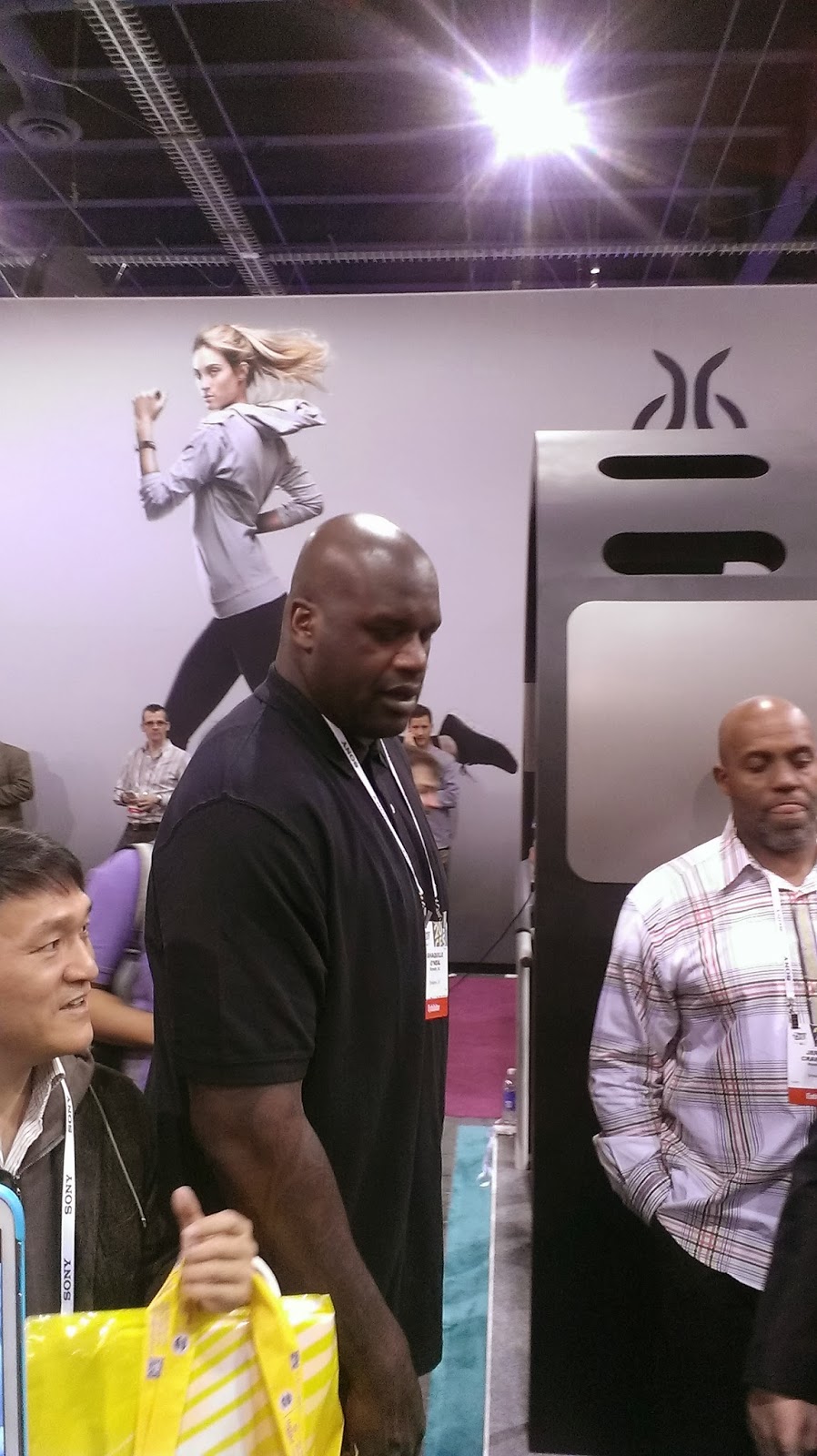
Several companies exhibited their digital health and fitness, and wearable technology products and services, some of which are highlighted in these videos: "Digital Health & Fitness Highlights: 2014 CES" and "Wearable Tech Highlights: 2014 CES." I saw the Kolibree Smart Toothbrush, LG Lifeband Touch fitness activity monitor, Reebok CrossCheck, and Sleep Number X12 Smart Bed. I even witnessed Shaquille O'neal checking out the Fitbit booth. While an increasingly crowded sector, I do not have any doubts that fitness and wearable technology will grow rapidly in the coming years as people seek to monitor their health and daily activity.

Specifically to mobile technology, I saw the latest smartphones and tablets that will be available to consumers in 2014 including the Huawei Ascend Mate2, 4G Lenovo ThinkPad 8, and Samsung Galaxy NotePRO 12.2. This year's devices possess faster processors and higher quality screens. Moreover, NVIDIA unveiled the Tegra K1 mobile processor, which, for the first time, next-generation PC gaming will now be available on mobile platforms. These developments will allow app and web-content developers like ROI3, Inc. to produce an experience for consumers on their mobile devices that they already experience via personal computers. Here is a video that provides highlights from the mobile tech sector at CES.


I also attended the second annual CEA MoDev Hackathon that featured nearly 100 developers competing individually and as teams for up to $100,000 in cash and prizes. As explained in this press release, "Apps were awarded for innovative integration with Microsoft, Amazon, Samsung, Sony and Modev." Furthermore, "App Projects from Travel Channel Cities Metro, Travel Offers, Travel Swipe, Travel Channel Navigator and Travel Live were awarded top honors. The Journey Live app was selected as the grand prize winner."

Lastly, the Mobile Apps Showdown competition featured four-minute elevator-pitch-style presentations from 10 semifinalist app developers selected ahead of time by a team of expert panelists and Living in Digital Times readers. Password Box, an innovative, free password manager, with secure digital wallet features for your iPhone, iPad and desktop devices, won the top showdown prize. Ballerz, an iOS app that helps players find pickup basketball games in their area based on skill level, was the online showdown winner. A group of active duty naval officers who found that playing sports reduced stress and boosted morale on the base developed Ballerz.

Aaron Rose serves as President and CEO of ROI3, Inc., a Seattle, Wash.-based company that empowers people in emerging economies through innovative, technology-based solutions. He is also the editor of Solutions for a Sustainable World.

February 3, 2014

Hackathon Where Wearables and Gaming Come Together

Photo of Alex Donn: AT&T Mobility
While writing my previous post about the 2014 AT&T Developer Summit, I located my notes from the AT&T | SIC Mobile App Hackathon - Wearables event that I attended on October 26-27, 2013 in Seattle, Wash. Focused on wearables and gaming apps, I attended this event to learn what great ideas people are generating that can help live a healthier lifestyle or overcome physical or mental ailments. Many of the apps produced complement the mHealth app that my colleagues and I are developing that provides health and wellness information to people with mobile devices in emerging economies. While Alex Donn, Developer Evangelist at AT&T Mobility, wrote a summary of the event on the AT&T Developer Blog, there are a couple of items worth mentioning in this post.

18 teams presented during the hackathon, which produced five finalists that made subsequent presentations for prizes at the Seattle Interactive Conference on October 29, 2013. While not among the top three winners, I was impressed with the SmartChair, which allows a user to monitor the time he or has is sitting and notifies the user when it is time to take a break. Too many people, myself included, spend long hours sitting at a desk for long periods of time. We get focused on completing our tasks and fail to take breaks that are good for mental and physical well being. A device like SmartChair will result in a healthier working environment, which will produce fewer health issues and a reduction of medical costs.

I also appreciated the app produced by GoalPhysics that provides "breakthrough performance through big data, not drugs." Winning third third place overall, this app collects large amounts of data from athletes wearing apparel with integrated sensors. Not only does this app provide a competitive edge for professional athletes where hundredths of a second could separate a winner from a tenth place finisher, but the recreational athlete may benefit from collecting large amounts of their performance data, in real-time, during exercise routines to learn areas of strengths and weaknesses.

A video of the presentations of the five finalists may be viewed through this link or the video embedded below (GoalPhysics is the first presenting team):


Aaron Rose is an advisor to talented entrepreneurs and co-founder of great companies. He also serves as the editor of Solutions for a Sustainable World.

January 31, 2014

2014 AT&T Developer Summit

I attended the AT&T Developer Summit from January 4-6, 2014 in Las Vegas, Nev. The three-day event consisted of a mobile app hackathon, executive panels, and speaking sessions. This was my second year attending the AT&T event, which I find valuable in meeting developers and technology entrepreneurs, as well as learning about the latest trends in mobile technology.

With cash and prizes totaling over $200,000, more than 100 teams developed an app during the hackathon. Participants at this year's hackathon were able to choose between a Wearables Track and an AT&T API Track. You can read about the winning teams at this link on the AT&T Developer Blog.

25 panels and speaking sessions were scheduled during this year's conference. I particularly found value in attending "Let’s Drop the 'Mobile' from Web Development" by Doug Sillars, Performance/Optimization Lead, Developer Advocacy at AT&T. Noting that "with a plethora of platforms and buckets of browsers (each contributing a variety of versions), displaying content uniformly can be a challenge. The growth of mobile devices has exponentially expanded the landscape (and additionally added a sundry of screen sizes). Is developing separate experiences for mobile and desktop users really the best way to reach your users?" With a greater percentage of people accessing the Internet through mobile devices, Dr. Sillars presented a question that many developers ask: Is developing separate experiences for mobile and desktop users really the best way to reach your users?

In his presentation, Dr. Sillars explained, "There is no more 'Mobile Web', it is all just 'The Web' on different screens." He noted that greater than 50 percent of Amazon.com's customers shopped via a mobile device mobile during the 2013 holiday season and in September 2013, the number mobile unique visitors equalled those accessing ESPN.com on a desktop. Furthermore, Dr. Sillars said page size and speed index are essential to keeping customers engaged with your site. An ideal website accessed through a mobile device should upload in less than three seconds.

Another presentation worth discussing in this post is "Building an Amazing Mobile Experience for Multiple Devices" by Lotus Chen, Chief Technology Officer of Taiwan based-ASUS. Noting that Android is the world's most popular mobile operating system during his presentation, Mr. Chen said mobile content developers are facing an increasing challenge of developing content with a consistent user interface (UI) design given that Android powers many different device types with different screen sizes and form factors, ranging from small-size phones, mid-size tablets, to large television sets.

With respect to supporting different screen sizes, Mr. Chen recommends optimizing the layout by providing different layout resources for different screen sizes. On larger devices, he says create compound views to take advantage of extra screen real estate, so you can display more content and ease navigation. Moreover, Android scales the drawable resources based on screen density. To ensure the app screen looks presentable, Mr. Chen suggests using different version of resources need to be available for different screen densities.

I enjoyed the experience of attending the 2014 AT&T Developer Summit where I met some interesting people developing great apps. I also learned new content development and product monetization ideas, which I will incorporate into the business strategy of ROI3, Inc. There is no question that the world is accessing the Internet via mobile devices. Company's that are able to develop content optimized for mobile devices will gain a competitive edge.

Aaron Rose serves as President and CEO of ROI3, Inc., a Seattle, Wash.-based company that empowers people in emerging economies through innovative, technology-based solutions. He is also the editor of Solutions for a Sustainable World.

December 31, 2013

The Customer is Not Always Right (but Should be Treated with Respect Nonetheless)

I am writing this post from Las Vegas, Nevada, where I am planning to attend the 2014 AT&T Developer Summit and 2014 International CES. I arrived in Las Vegas on Dec. 18, 2013 to spend the holidays with my mom in Boulder City, Nevada. I spend a large amount of my time working from the Boulder City Library, which is a nice facility with ample space for reading, working or performing research. Unfortunately, I had a bad experience with a staff member during one particular visit. This experience serves as a reminder the importance of good customer service even when the customer is not right.

In short, I was rudely scolded by a library employee for possessing a cup of coffee contained in a paper cup inside the library. While I recognize that I was wrong for bringing a beverage inside the library (food and drinks are prohibited), the staff member should have pointed out my error in a more polite and professional manner. Very loudly and rudely, she ask me what was in my paper cup and when I responded that it was coffee, she informed (scolded) me that my beverage is not to be allowed in the library. Given the quiet atmosphere of the library, I was terribly embarrassed for being treated in a manner that I have not endured since I was a small child.

The Boulder City Library also has a no cell phone policy. While I have never violated this policy, I have witnessed the way certain staff members have scolded patrons for talking on their mobile phone inside the library. I recall one experience when a boy of elementary school age was doing some computer research for a homework assignment. With his cell phone, he proceeded to call his mom asking a couple of questions about his assignment. While talking on the phone, a library staff member approached the boy and loudly scolded him for violating the library's no cell phone policy. The boy endured great embarrassment.

In each situation, the boy and I were wrong in our actions. However, staff members should be trained to handle these situations with more professionalism and politeness. It is important to note that I have encountered staff members who are very polite and professional.

The customer is not always right. If any customer or subscriber of ROI3 has a problem with our service, however, please know that my colleagues and I will do our best to resolve the problem. Regardless of the problem, I promise that you will be treated with respect and dignity. Always feel free to contact me directly at aaron.rose@roi3.com or +1 (206) 552-9601. Thank you and Happy New Year!!

[Disclosure: I am a property owner in Boulder City, Nevada, which allows me to possess a Nevada Library Card.]

Aaron Rose serves as President and CEO of ROI3, Inc., a Seattle, Wash.-based company that empowers people in emerging economies through innovative, technology-based solutions. He is also the editor of Solutions for a Sustainable World.

December 18, 2013

Optimistic about China Despite its Slowing Economic Growth and Rising Costs

On November 20, 2013, I attended an event in Seattle, Wash. entitled "Update on Issues in the US-China Relationship," which was co-hosted by the Washington State China Relations Council and the Trade Development Alliance of Greater Seattle. Erin Ennis, Vice President of the US-China Business Council (USCBC), a Washington, DC-based organization representing approximately 220 US companies selling American goods and services in China, focused her presentation on the USCBC 2013 China Business Environment Survey Results.

According to a press release dated October 10, 2013, the USCBC "surveys its member companies each year to gauge China's business climate and assess the top challenges faced by companies doing business there." The press release explains, "As China's economy has slowed over the past year, USCBC’s survey results indicate that companies face business and market access issues in an economy that for the past five years has been a rare bright spot in a difficult global downturn."

Ms. Ennis noted that the growth rate of China's economy is slowing and cost increases are the most significant challenge of member companies. Reading from the report, she said, "Fewer companies in this year's survey report that their profit margins in China are better than that of their global rates, and fewer companies report double-digit revenue increases compared to previous years."

Ms. Ennis said competition with Chinese companies in China is listed second among the ten challenges identified by member companies (see list below). The report's Executive Summary explains that "most multinational companies in China contend with other foreign competitors as well as both state-owned and private Chinese companies. Survey respondents expressed concern over the benefits that Chinese companies (both state-owned and private) receive that are not available to foreign companies."

Interestingly, while intellectual property rights (IPR) are a regular topic in the U.S. media, IPR enforcement is listed fifth among the ten challenges identified by member companies. The report says, "Problems with licensing occur at the central, provincial, and local levels and affect almost every aspect of doing business in China. Licensing issues often overlap with other issues in the top 10, including uneven regulatory implementation, lack of national treatment, and insufficient transparency in government rule drafting and decision making."

While my colleagues and I at ROI3 recognize the slowing pace of China's economic growth, we continue to remain optimistic about the opportunities to monetize our mobile software-as-a-service in the world's second largest economy and one of the world's largest mobile telecommunications market. As outlined in previous posts on this blog, China currently has over 300 million 3G subscribers and will see smartphone shipments exceed 460 million units by 2017 including 440 million 4G users by 2017. We are committed to producing localized mLearning apps and content that will empower smartphone and tablet users in China to improve their lives.

The top 10 challenges cited by USCBC member companies are:

#1  Cost increases
#2  Competition with Chinese enterprises (state-owned or private)
#3 (tie)  Administrative licensing
#3 (tie)  Human resources: Talent recruitment and retention
#5  Intellectual property rights enforcement
#6  Uneven enforcement or implementation of Chinese laws and policies
#7  Nondiscrimination / National treatment
#8  Transparency
#9  Standards and conformity assessment
#10  Foreign investment restrictions

Aaron Rose serves as President and CEO of ROI3, Inc., a Seattle, Wash.-based company that empowers people in emerging economies through innovative, technology-based solutions. He is also the editor of Solutions for a Sustainable World.