Showing posts with label Japan. Show all posts

December 27, 2021

Japan: On the Front Line

Image: The Economist
Reflecting on my earliest childhood memories, Japan is a country outside of my home country of the United States that I first learned about. Starting with my grandfather sharing his experience of serving in the U.S. military at Pearl Harbor, Hawai'i on Dec. 7th, 1941 (an experience that does not reflect the east Asian country in a positive light), to my fourth grade teacher, Ms. Murakami, a Japanese-American who shared aspects of the country's unique culture, to summer visits to my grandfather's sister-in-law in Florida where Aunt Etsi taught me to say a few Japanese words and how to use chopsticks, I find the country fascinating.

During my professional career, I appreciate having the privilege of spending a significant amount of time in Japan. These experiences, some of which are discussed on this forum, include helping a Japanese medical device company create a strategic plan to export their product to key international markets, advising an American company to deploy its services in the country, or building relationships with business and government leaders from Kobe, Japan's only city to have a sister city relationship with Seattle. Therefore, it was with great interest to read a special report produced by The Economist about the world's third largest economy.

Accompanying the report, which is comprised of eight articles, an editorial notes that "Two takes are often told about Japan. The first is of a nation in decline, with a shrinking and ageing population, sapped of its vitality. The second is of an alluring, hyper-functional, somewhat eccentric society—a nice place to eat sushi or explore strange subcultures, but of little wider relevance to the outside world. Both tales lead people to dismiss Japan. That is a mistake."

The Economist's report argues that "Japan is not an outlier—it is a harbinger. Many of the challenges it faces already affect other countries, or soon will, including rapid ageing, secular stagnation, the risk of natural disasters, and the peril of being caught between China and America. The fact that some of these problems hit Japan early makes it a useful laboratory for observing their effects and working out how to respond."

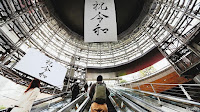
The report begins by explaining that "Japan's new imperial era began in spring 2019, when a nondescript man in a dark suit revealed its name: Reiwa. The first character, rei, means 'auspicious' or 'orderly'; wa means 'harmony' or 'peace' (officials chose 'beautiful harmony' as the English rendering). For the first time the name came not from classical Chinese literature, but from Japan's Manyoshu poetry anthology, compiled over a millennium ago: 'In this auspicious (rei) month of early spring, the weather is fine and the wind gentle (wa).'"

With respect to Japan making a "case for a more active and interventionist security policy," The Economist points out that "If rivalry between China and America is the big story in 21st century geopolitics, no other country, except perhaps Taiwan itself, has as much influence as Japan over how it will unfold—nor as much to lose if it goes badly. 'Japan is the front line,' says General Yoshida Yoshihide, chief of the army. This reality is forcing a realization that, although there can be no substitute for America, Japan must supplement it in order to maintain a favorable balance of power."

Moreover, "Japan is strengthening defenses and building ties with others. Tanaka Akihiko, of the National Graduate Institute for Policy Studies (GRIPS) in Tokyo, speaks of a shift from a 'one-pillar' to a 'multi-pillar' architecture. 'We can't rely on America alone,' he says. That does not mean turning away but keeping America close by contributing more. Nor does it mean antagonizing China, upon which the economy depends. 'As the rest of us figure out how to compete with China without catastrophe, Japan has been there for at least a decade and Japan has the best strategy,' says Michael Green, a former official at America's National Security Council."

On the topic of climate change, Japan is prepared for disaster, but unprepared for climate change. "As the threat from natural hazards grows, from climate change-fueled fires to zoonotic pandemics, the world must live with more risk," says The Economist. "The countries that fare best will be the resilient ones. In 'The Resilient Society,' Markus Brunnermeier, an economist from Princeton University, argues that "Resilience can serve as the guiding North Star for designing a post-covid-19 society."

The discussion on climate change importantly adds: "The biggest lesson from Japan is the value of preparation." As Karashima Yukari, who works at the Peace Boat Disaster Relief Volunteer Center, a Tokyo-based nongovernmental organization that assists people in disaster-affected communities and strengthen the capacity of local communities to response to disasters both in Japan and around the world, says, "'It's too late if you start acting after the disaster happens.' That this sounds banal in much of the world makes its absence more striking."

What is more, "Of $137bn provided in global disaster-related development assistance from 2005 to 2017, 96% was spent on emergency response and reconstruction, less than 4% on disaster preparedness. Donors prefer high-profile rescue work; the media cover disasters when they happen, not when they do not. Many governments treat prevention as a cost, not an investment. But natural hazards are not always disasters. 'The hazard becomes a disaster when the coping capacity is too weak,' says Takeya Kimio, an adviser to Japan’s overseas development agency. In 2015 he promoted the 'Build Back Better' concept in the UN Sendai Framework, a global pact on disaster-risk management."

The special report also discusses how Tokyo, the world's biggest city, is also one of the most livable. "[W]ith 37m residents in the metropolitan area and 14m in the city proper," Tokyo "offers lessons to developing cities elsewhere. In 1950, 30% of the world's population was urban; by 2050, 68% will be. Much remaining growth will be in megacities of more than 10m in Asia and Africa. There are 33 such cities now; by 2030 there will be 43. As Tokyo grapples with what to do when cities age and shrink, it can also serve as a case study for other rich cities."

Japan is learning to cope with an ageing population, notes The Economist. "Demographic change has two drivers often lumped together: rising longevity and a falling birth rate. Their convergence demands 'a new map of life' says Akiyama Hiroko, founder of the University of Tokyo's Institute of Gerontology." Furthermore, "Infrastructure created when the population was younger and the demographic pyramid sturdier must be redesigned, from health care to housing to transport. The new reality demands a 'completely different way of thinking,' says Kashiwa Kazuyori, head of Gojome's town-planning department. When he started work in the 1970s, the focus was on growth. Now it is about managing decline."

Part of managing the decline of an ageing workforce is replacing retiring workers with foreign workers. Japan, perhaps unfairly, is often criticized about its reticence of allowing foreign workers to immigrate to the island nation. An article focused on how the ranks of foreign workers are growing fact but from a low base, however, says "One in every 55 workers is foreign, up from one in every 204 in 2009."

As for the economy, The Economist explains how "Japan is the canary in this coal-mine":
In the 1980s its booming economy struck fear in the world. After the bubble burst in the 1990s, public debt ballooned and deflation set in. Many in the West said Japan's debt was unsustainable and the Bank of Japan (BOJ) should do more to boost inflation. In 2013 the BOJ's governor, Kuroda Haruhiko, embarked on dramatic monetary easing. The debt hovered around 230% of GDP. A strange thing ensued: no fiscal crisis struck, nor did inflation come near the 2% target. "The standard textbook on macroeconomics needs an additional few chapters—it doesn't capture the problems Japan faced," says Shirakawa Masaaki, Mr Kuroda's predecessor.

Japan is among many countries that has experienced a decline of worker productivity. As the article on the economy explains, "Boosting productivity could help to offset the impact of the shrinking population." Yoshikawa Hiroshi, president of Rissho University in Tokyo, "reckons that innovation is key to growth, and that ageing creates new problems that entrepreneurs can solve. Generational shifts may help. While many still prefer stable sarariman (salaryman) jobs in big firms, some of today's brightest graduates go into startups." Encouragingly, I have observed a rise of Japanese startups in the past several years that are developing innovative solutions in artificial intelligence, climate tech, data analytics and machine learning, digital healthcare, robotics, and enterprise services.

The report concludes with an assertion that Japan "would be better with younger and more dynamic leaders." The ruling LDP party has won every election "but twice since the party's founding in 1955." The article importantly explains that "Without a threat of losing power, any ruling party becomes unaccountable. Demographic change exacerbates things: some 20% of local politicians are elected without a contest. The result is a government that, in many ways, does not look or think like its people. Less than 10% of new Diet members are women; just three out of 21 cabinet ministers are. Only two are under 50. Dynastic politicians still dominate."

What is more, "Society is changing faster than established powers. Japan is in the midst of a quiet transformation, argues Hosoya Yuichi, a political scientist: 'There is a new wind, but within an old-fashioned structure.' On social issues from gay rights to family law, the LDP is out of step. Many voters feel they cannot change the system, which drives some into business or civil society, not politics."

While attending a conference about Japan's importance in the future of Asia in 2016, I was asked by a fellow attendee about my thoughts on economic engagement in Japan. In light of China's rapidly growing economy at the time, coupled with Japan's secular stagnation of low inflation, low interest rates and low growth, I replied that a business would be foolish to consider entering the Japanese market. I was wrong.

Despite tightening regulations on the private sector, increased censorship of the media and Internet, inconsistent policies on currency repatriation, and issues concerning human rights, China's market may be too big for some businesses to ignore. Japan, however, with its independent judiciary, democratic government, and open economy, presents an opportunity that businesses of all sizes should explore.

Do you agree that Japan is a harbinger, not an outlier? What business or investment opportunities are you seeing in the country?
 
Aaron Rose is a board member, corporate advisor, and co-founder of great companies. He also serves as the editor of GT Perspectives, an online forum focused on turning perspective into opportunity.

October 29, 2021

GSMA Presents Recommendations to Asia Pacific Policymakers for How To Accelerate Investment and Innovation for a Digitally Inclusive Society

Following from the previous post about GSMA's 2021 report about China's mobile economy, the UK-based organization that represents the interests of mobile operators worldwide, also produced a similar report focused on Asia Pacific's mobile economy. For the purposes of Asia Pacific report, the GSMA clarifies that "industry data and analysis does not include Greater China (mainland China, Hong Kong, Macao and Taiwan), as opposed to previous editions of the report. As a result, the aggregate regional data in this report is not directly comparable with previous reports. Industry data and analysis for the Greater China region are presented in The Mobile Economy China 2021 report."

In explaining how the mobile industry responded to the Covid-19 crisis in the Asia Pacific region, the report importantly says the industry was "particularly instrumental during this period and will be even more integral to the way people live and businesses operate post pandemic." What is more, "Across Asia Pacific, [mobile] operators are using the exceptional scale and utility of mobile networks and services to facilitate innovative digital solutions for large and small enterprises in line with Industry 4.0 objectives. In particular, 5G and IoT will play key roles in the implementation of digital transformation projects across different industries."

The report also presents the following key points:
  • 1.8 billion people in the Asia-Pacific region will subscribe to mobile services by 2025, representing 62% of the region's population. India will account for more than half of new subscribers.
  • 14 percent of total connections will be running on 5G networks by 2025. This is marked by significant 5G-related activities in several new markets, including India, Indonesia and Malaysia.
  • $860 billion economic value added generated by mobile technologies and services by 2025. Countries in the region increasingly benefit from the improvements in productivity and efficiency brought about by the increased take-up of mobile services.

On the topic of policies to enable digital advancement, the GSMA correctly notes that "The pandemic has emphasized the need for connectivity and the critical role of mobile technology. As Asia Pacific continues to deal with, and ultimately emerges from, the pandemic, connectivity will be crucial to rebuilding economies and making them more resilient to future shocks." Furthermore, "5G networks, cloud services, edge computing, AI, big data and IoT will all play a key role in realizing the full potential of a post-pandemic digital economy."

I support GSMA's assertion that "Now is the time for governments to reassess the business and regulatory environment for mobile services in order to accelerate investment and innovation for a digitally inclusive society." Steps policymakers should take include:
  • cultivate an enabling regulatory environment to bolster connectivity, which in turn supports digital transformation and innovation
  • adopt policies that facilitate infrastructure deployment and create a sustainable investment climate
  • create safe and trustworthy internet environments as more people come online
  • establish an effective spectrum policy that allows for timely and transparent allocation of harmonized spectrum to meet future connectivity demand.
"Actions taken today by policymakers should be seen as an investment into future economic growth, societal development and technological innovation."

Infographic: GSMA Intelligence

Do you agree with GSMA's recommendations to policymakers for how to accelerate investment and innovation for a digitally inclusive society?

Aaron Rose is a board member, corporate advisor, and co-founder of great companies. He also serves as the editor of GT Perspectives, an online forum focused on turning perspective into opportunity.

August 1, 2020

Asia Pacific Will Account for Around Half of New Subscribers Globally by 2025, Says GSMA

According to a report authored by GSMA Intelligence, the research and consulting arm of the GSMA, a UK-based organization that represents the interests of mobile operators worldwide, "The Covid-19 outbreak has had wide-sweeping effects on all aspects of the [Asia Pacific] economy due to falling commodity prices, reductions in international investment, decreased incoming remittances, rising foreign debt burdens and a disproportionate impact on the informal sector (especially important in Asia Pacific). Undoubtedly, the outbreak will affect the development of the mobile ecosystem as well, despite the industry’s best efforts to cushion the impact."

The report, The Mobile Economy Asia Pacific 2020, further says "the digital ecosystem has proved vital in the response to Covid-19. Participants from the entire digital value chain – including operators, vendors, internet players and governments – are pulling together to ensure the most positive outcome possible. And as a side effect of the pandemic, mobile operators have been granted a unique opportunity with a boost in the adoption of mature/quality-based services e.g. video calling for business, online collaboration tools, video streaming, e-commerce and mobile payments. At the same time, the situation has brought to attention governments that have not taken the necessary steps to establish an inclusive digital economy."

What is more, "Across Asia Pacific, and indeed around the world, the Covid-19 outbreak has highlighted the importance of a robust digital economy." The strength of a robust digital economy will depend on the variety of information and communications technology (ICT) solutions made available for consumers and enterprises alike.

"Digitization, which was already an important target, is therefore moving up the agenda for businesses and governments alike, with many accelerating their timelines because of Covid-19. A range of businesses, particularly those in retail, transport, logistics, manufacturing and healthcare, are looking to potentially increase their investment in digital transformation to cope with the impact of the pandemic and build a stronger position for the future."

Based on conversations with colleagues in the Asia Pacific region, I concur that "[v]endors of ICT solutions, especially those operating across the entire value chain, should take this as an opportunity to strengthen their role as key ICT partners to enterprises. But timelines will vary: some enterprise customers will escalate their ICT investments immediately, while others will have to balance addressing the short-term crisis with long-term opportunities."

Below are the report's key findings:

5G Investment:
  • Mobile operators will invest over $400 billion (Capex) on their networks between 2020 and 2025, of which nearly two-thirds ($331 billion) will be spent on 5G deployments;
  • Asia Pacific is home to some of the most advanced 5G markets in the world, with nine markets having launched commercial mobile 5G services – including Japan at the end of March – and 12 more have officially announced plans; and
  • 4G remains the dominant technology across the region in countries such as Bangladesh, India, Indonesia and Pakistan, where the focus remains in areas such as identity, digital commerce and payments, and cross-ecosystem collaboration to help create the digital societies of the future.

Regional Growth:
  • At the end of 2019, 2.8 billion people in Asia Pacific subscribed to mobile services, accounting for 66 percent of the population. With nearly 500 million new subscribers added since 2014, the region is one of the fastest-growing in the world and home to over half of total global subscribers; and
  • Asia Pacific will account for around half of new subscribers globally by 2025 and by this time, we forecast 266 million new subscribers to be connected across the region, bringing the total to just over 3 billion (70 percent of the population).

Socio-economic Development:
  • Over the next six years, 663 million people across Asia Pacific will start using mobile internet for the first time, bringing the total number of mobile internet users in the region to around 2.7 billion by 2025 (61 per cent of the population).
  • This growth in connectivity is helping the mobile industry increase its impact across all of the UN's Sustainable Development Goals and spurring adoption of mobile-based tools and solutions (e.g. in agriculture, education and healthcare) that aim to improve livelihoods in low- to middle-income countries and close the gender gap.

As reflected in the image to the right, the spread of 5G throughout the region will facilitate the adoption of connected devices (IoT). GSMA predicts that over six billion new IoT connections in Asia Pacific by 2025, accounting for half of global new additions. This creates an opportunity for those companies developing key growth verticals such as smart home and smart buildings.

Given my interest in digital health, I appreciate that "5G's role in the healthcare response to the pandemic, which utilized technologies such as telemedicine, remote ultrasound and thermal imaging, together with the benefits from the digitization of supply chains/Industry 4.0 in Asia Pacific, underscore the importance of the B2B segment." Furthermore, "Policymakers will need to provide regulatory flexibility for B2B partnerships so that operators have the freedom to innovate to realize 5G's full potential."

While not mentioned in the report, per se, it is important to note that companies developing hardware and services as a result of an improving technology infrastructure must implement the most stringent cybersecurity measures.

Infographic: GSMA Intelligence

What impact do you think the Covid-19 will have on Asia Pacific's digital economy? What ICT solutions are you developing for this rapidly growing region?

Aaron Rose is a board member, corporate advisor, and co-founder of great companies. He also serves as the editor of GT Perspectives, an online forum focused on turning perspective into opportunity.

January 16, 2020

Legacy Created by the 2020 Tokyo Olympics Will Launch 'Japan's Next Decade'

"Japan is back—and in the spotlight," proclaims the Economist Corporate Network (ECN) in a report entitled Japan's next decade: Opportunities for economy and society after the 2020 Tokyo Olympics. "Perceived as a laggard for decades, it is finally receiving attention, if not for staggering GDP growth, then as an example of how to deal with the population-related issues that many countries will face sooner or later."

Sponsored by Philip Morris Japan, the report notes that the "2020 Summer Olympic and Paralympic Games in Tokyo are playing a central role in the narrative of Japan's revitalization. The direct economic benefits of this iconic event are forecast to range from ¥30trn (US$282bn) to ¥32trn or around 0.6% of real GDP. The Olympic Games are also viewed by business executives as a great opportunity to boost morale and visibility, to 'catapult the host city into the premier league of cities,'" according to a report that looks into the economic impact of the Olympics.

Moreover, "The cumulative effect of the Olympics brings more important results than simply faster GDP growth. Olympic euphoria has developed into a new national idea, driving the country and its economy forward. 'The Olympics will be a great catalyst, showcasing all of the great things about Japan and Japanese society. There will be a huge positive effect from an incoming tourism point of view, but there is also domestic excitement, that will be created as well,' says Randall G. Wada, CEO of JLT Holdings Japan."

The report encouragingly explains that "this positive trend does not have to stop when the lights go off after the closing ceremony. The legacy created by the Olympics should be enough for the country to start building what we call Japan's next decade" as opposed to the 'lost decades' of economic stagnation in the 1990s and 2000s.

There are challenges, however, such as a rapidly aging population that may adversely impact Japan's next decade. "The statistics are well known: by 2030, more than 30% of Japan’s population—nearly every third person—will be over 65. This is unprecedented in world history. The Japanese government and people are concerned as to whether their society is sustainable with such a demographic structure."

What is more, "The Economist’s Glass Ceiling Index consistently ranks Japan as one of the worst environments for working women among OECD countries." In a chapter on driving growth through diversity and inclusion, the report says "improving conditions for working women and promoting 'total diversity' are crucial for Japan's next decade and beyond. The economic potential is huge, and the socio-demographic implications could benefit society as a whole."

Based on desk research and consultation with experts in Tokyo, the report's key findings include:
  • By 2030, more than 30% of Japan's population—nearly every third person—will be over 65, but the rate of aging peaked in the mid-2010s and is now beginning to plateau.
  • An aging population presents a market opportunity for companies that can recognize the needs of potential new customers, especially in the technology sector and IT and software industry.
  • The number of employees in Japan who are over 65 rose from 5.7m to 8.7m in 2008-18 and their share in workforce will amount to around 20% by 2030.
  • Up to 80% of Japanese companies in hospitality, nursing and transportation experience severe lack of workers. However, due to the decline in population, Japan finds itself in the unique position where the labor shortage presents a chance for the development of new automating technologies, without the risk of creating huge unemployment.
  • Eliminating the gender employment gap and promoting women to full-time positions can bring Japan a 15% increase in GDP.
  • Added value driven by the 4th Industrial Revolution in Japan can be as high as ¥30trn—in terms of economic impact, essentially another Olympics.
  • The manufacturing sector in Japan has a very high level of automation potential—at 71%, it is 11% higher than that of the US. By 2025, with the use of the internet of things (IoT) and automating technologies, industries such as construction can improve productivity by 20% and manufacturing productivity can grow by up to 2% per year.
  • Japan is lagging in the adoption of digital technologies, but there are still considerable achievements in innovation in Japan, particularly in manufacturing sector.
  • The number of international tourists in Japan increased more than six-fold in 2011-18, making Japan one of the top countries in the hospitality industry globally in just a few years.
  • The size of Japan’s domestic tourism market still dwarfs the inbound at ¥20.5trn compared with ¥4.52trn. The government is aiming to increase annual revenue from international travelers to ¥15trn by 2030.
  • If put together, the opportunities around the silver market, increased productivity, inbound tourism and diversity promotion could bring the national economy to a much larger size than the government's current target of ¥600trn.
Source: ECN

The report concludes that "[d]espite serious challenges, Japan has immense potential for the future. If put together, the opportunities around the silver market, increased productivity and diversity promotion could bring the national economy to a much larger size than the government's current target of ¥600trn. This would require more than new programs by the Cabinet Office new strategies by business, however; a shift in perspective and change of mindset are needed to see the risks as opportunities to be realized by society as a whole."

Is your business planning to establish or expand its operations in Japan in the next decade?

Aaron Rose is a board member, corporate advisor, and co-founder of great companies. He also serves as the editor of GT Perspectives, an online forum focused on turning perspective into opportunity.

October 13, 2019

How Will New Technologies Impact the Food and Beverage Industry?

"Our preferences, and taste, for food are not as static as they seem," explains a report produced by The Economist Intelligence Unit. "But some combinations do tend to stick. Is there a science behind taste and what we find appealing?"

Sponsored by The Japan Food Product Overseas Promotion Center (JFOODO), The science behind taste: impact on the food and beverage industry of a better understanding of the human palate is a report that "explores how new technologies, new lifestyles and scientific research have contributed to new understandings of the human palate. Better insight may dispel long-held beliefs about which tastes work best together, leading to new pairings which may not only taste better together, but are also healthier. This could not only indicate new opportunities for the food and beverage industry but also challenge these traditional industries to adjust their product development and business strategies."

The key takeaways of the report are:
  • How technology is informing our tastebuds: technologies such as machine learning are being developed to deal with the complexity and variety of data in the food industry and our very own taste buds. New technologies inform some of the biggest consumer companies on taste preferences to adequately meet consumer needs.
  • How technologies are helping society explore new taste, and new combinations of taste: new technologies have also enabled companies to extract different aromas from food ingredients, and digitize them, to make entirely new flavors and food products—as well as revealing non-traditional combinations of food ingredients that will go well together.
  • New technologies have the potential to contribute to improve our food waste issues: Algorithms such as Consumer Flavor Intelligence inform major companies to optimize food production, by meeting the preferences of the larger consumers, helping them to reduce waste and/or over-production. Artificial intelligence (AI) and big data have also been instrumental in giving consumers awareness of where and how their food ingredients have been grown, while giving producers more precise forecasting models of supply and demand.
  • Globalization and the homogenized diet: as people travel more and are exposed to a wider range of food through various media, we are eating a more homogenized diet no matter where we live, which is straining resources. Therefore, supporting global diversity in tastes while keeping food systems sustainable is becoming a significant challenge.
  • New scientific findings will continue to redefine our optimal diet going forward: the more we develop an understanding of our palate, the more it becomes apparent that taste preferences relate to numerous factors such as sensitivity thresholds, learning, genetics, nutritional deficiencies, and early exposure to certain foods.
  • The new ordinary: new information about food ingredients and taste not only confirm the obvious ways to consume food, but also predict new and less expected ingredient pairings. There is creativity in blending human and artificial intelligence, which may open many more doors in how we could taste and perceive food in future.
In addition, the report presents the following conclusion:
Today, data analytics and AI tell us about what we prefer and why. Our lifestyle and travel preferences also have an impact on our diet and what we choose to eat, and the choice ultimately remains with us. However, what we do not have control over, where our food comes from, and how it was fished, farmed or caught, is where science can help by giving us the reassurance of digitally tracking provenance.
By monitoring consumer preferences, companies are able to accurately meet consumer needs, thereby avoiding food waste. Moreover, it also allows for new and more innovative ways to sell products, while providing access to healthier foods and more balanced diets.
We, as a species, are still evolving. While we remain unconsciously and genetically open to the five taste profiles of sweet, sour, salty, bitter and savory, our conscious palates, driven by consumer trends and external forces, have evolved to enjoy other flavors and pairings not known by our ancestors.
And in tandem, machines are working to develop new tastes and flavors that seek to mimic the choices we make ourselves. The next time you're browsing the aisles of your local grocery store, that tasty-looking pasta sauce you sling in your basket may have been the product of the latest in AI working in harmony with the human brain.
How do you think AI will influence your next dining experience?

Aaron Rose is an advisor to talented entrepreneurs and co-founder of great companies. He also serves as the editor of Solutions for a Sustainable World.

January 15, 2019

Report Says the Rising Incidence of Cardiovascular Diseases Poses a Substantial Challenge to Asia-Pacific Markets

"Cardiovascular diseases (CVDs), disorders of the heart and blood vessels, are the leading global cause of death annually," says a published by The Economist Intelligence Unit (The EIU) and EIU Healthcare, its healthcare subsidiary. Commissioned by Amgen, an American biopharmaceutical company, Protecting the heart: Preventing cardiovascular disease in Asia further explains CVDs "levy a substantial financial toll on individuals, their households and the public finances. These include the costs of hospital treatment, long-term disease management and recurring incidence of heart attacks and stroke. They also include the costs of functional impairment and knock-on costs as families may lose breadwinners or have to withdraw other family members from the workforce to care for a CVD patient. Governments also lose tax revenue due to early retirement and mortality, and can be forced to reallocate public finances from other budgets to maintain an accessible healthcare system in the face of rising costs."

The report provides a study of the economic impact of CVD risk factors on the following Asian markets: Australia, China, Hong Kong, Japan, Singapore, South Korea, Taiwan and Thailand. Below are its key takeaways:

"The rising incidence of CVD poses a substantial challenge to Asia-Pacific markets. The rising incidence and expected treatment costs of CVDs challenge the sustainability of many healthcare financing models in the region. Early retirement and functional disability from rising CVD incidence also erode the tax base and put pressure on social service budgets. This can lead to fiscal constraints that have a regressive impact on citizens. Reducing risk factor incidence, which could reduce and even prevent CVDs, is a more preferable strategy.

"The four main modifiable cardiovascular risk factors pose a communications challenge for governments and health agencies. Because the effects of the four risk factors on cardiovascular health—smoking, hypertension, obesity and high cholesterol— can accumulate over many years, individuals have little to no knowledge that they have increased their risk for CVD until symptoms occur. This makes preventing these risk factors all the more challenging.

"Hypertension is the risk factor that contributes the highest cost. Hypertension is exerting the greatest population attributable cost across the eight markets with an estimated total of US$18bn annually, according to Economist Intelligence Unit estimates. Across the other estimated annual risk factor costs, high cholesterol contributes US$15bn, smoking US$11bn, and obesity $8bn.

"The costs of CVDs are not fixed. Greater awareness and policymaker attention can substantially reduce CVD costs as many obstacles and corresponding solutions have been identified as effective. For example, the World Heart Federation provides a number of roadmaps to manage CVD risks brought on by hypertension, high cholesterol and smoking. For the two “silent” risk factors, the pathways are similar: improve patient and physician awareness of key risk factors, increase access to diagnostic testing, empower patients with knowledge, and provide professional support and affordable drug access to manage their risks.

"Policy options for primary prevention include choice 'nudges.' Policy options for primary prevention of all risk factors include 'nudges' to positively influence dietary choices, such as improved food labeling or partnerships with companies to encourage food reformulation to remove unhealthy ingredients. Investment in green spaces in urban areas and subsidized access to health facilities can also encourage physical activity.

"Effective secondary prevention can also significantly affect costs and outcomes. The recurrence rates for people suffering from a CVD event are high. For instance, in Australia, the risk of a subsequent stroke is 43% in the ten years following the first event, and the mortality rates for known sufferers of CVDs are substantially higher than those not at high risk. Across the span of a first CVD event and one’s death, the cost for disease management and the treatment of secondary events can be significant. Prioritizing at-risk groups can also drive positive impacts on CVD cost management."

Based on my experience, I agree that "[t]he Asia-Pacifc's CVD burden sits within the broader context of a rise in NCDs (noncommunicable diseases), due partly to ageing populations and partly to economic transition. It is a threat to the health and financial security of citizens and a burden on the public finances. Efforts to increase access to healthcare over recent decades will be undermined if cost-cutting measures are required to balance the books."

The report encouragingly concludes that "many risk factors for CVDs are modifiable through primary and secondary preventions, across behavior, lifestyle and medical domains. Looking forward, a powerful CVD action plan is one that targets multiple points along the 'continuum' from primary prevention to cost-effective treatment methods and secondary prevention. Innovation in service delivery and greater leveraging of data, digital technology and wearable devices can also help optimize CVD detection and management in cost-effective ways."

What solutions are you seeing that are reducing the incidence of CVDs?

Aaron Rose is a board member, corporate advisor, and co-founder of great companies. He also serves as the editor of GT Perspectives, an online forum focused on turning perspective into opportunity.

April 1, 2018

Report Focuses on How Asia-Pacific Is Leading the Way in Emerging Media Consumption Trends

A report published by The Economist Intelligence Unit (EIU) asserts that "although smartphones are now ubiquitous across much of the planet, Asia is at the cutting edge of innovation when it comes to their use." Digital upheaval: how Asia-Pacific is leading the way in emerging media consumption trends further says: "Already, across much of the region there has been fundamental change in media consumption and communication. Thanks to smartphones, which have brought millions online for the first time, many countries have leapfrogged the traditional intermediate stages of media consumption, and individuals have taken control. They can now access what they want, where and when they want it." Commissioned by The Trade Desk, a Ventura, Calf.-based technology company that empowers buyers of advertising, the report is based on in-depth research, including interviews with 16 experts and executives.

Based on my frequent travels to Asia over the past several years, I concur with the report's assertion that "the region's entrepreneurs have been quick to seize the opportunity, creating new networks of information and entertainment, and finding innovative uses for technologies such as multi-functioning messaging apps and quick-response (QR) codes."

Moreover, the report, which is available in English简体中文, and 日本語, explains, "All of this has opened up new channels of communication between businesses and consumers. It has also been a boon to the region's creative industries, notably small-time content producers such as individual live streamers. Further media-related innovations popularized in Asia, like the ability to link micropayments to these live-streaming platforms, are proving this region's inventive prowess to the rest of the world."

Regarding the Middle Kingdom, the report accurately notes:
China's unique digital ecosystem is a vital part of the story, giving rise to platforms like WeChat that have pushed the boundaries of technologies in areas such as payment and financial services, and paved the way for artificial intelligence (AI)-enabled chatbots to do things such as aiding customer interaction. Chatbots are just one new avenue companies are using to talk directly to individual consumers—QR codes are another, while digitally informed segmentation of markets for advertising campaigns can help brands forge new connections between data, clicks and purchases in the region.
Alongside the exciting advances, however, "there are concerns: Asia's frantic surge in smartphone-enabled media consumption has led to worries about media literacy. For example, Carol Soon of the National University of Singapore warns that Asian consumers have less awareness of data-privacy concerns than in Europe or North America, where it is a major issue. In the advertising space, tracking online metrics can be difficult for marketers used to channels such as TV.

"The story of Asia's digital media consumption, however, is predominantly about burgeoning opportunities and clever leaps, echoing the region's recent dramatic economic growth. Although most of these innovations can be found outside the region, in Asia their development, use, scale and impact are distinctive in several ways."

The following key advances in media consumption in Asia are addressed in the report:

Hyper-functional messaging platforms (China)
Platforms such as WeChat have become mutifunctional, especially with financial services. This is both threatening the ecosystem of app proliferation and upending payment models.

Live-streaming services (China)
Mass live streaming, an entirely new digital media category, has become especially popular among internal rural migrants, who number nearly 300 million and use it to forge informal networks of support in new environments. This has sparked new innovations in micro-payments between audiences and content creators.

QR codes (China)
Companies are finding innovative uses for QR codes, which allow them to communicate directly with individual customers in on-the-go situations.

K-pop's digital underpinnings (South Korea)
K-pop has become internationally popular thanks to a clever combination of world-leading digital infrastructure and innovative cross-border social-media marketing.

Social media as migrant social network (Indonesia, the Philippines)
Previously isolated overseas domestic workers are using social media on personal smartphones to build virtual communities of support, information and entertainment.

Long-form narrative advertising (Thailand)
Bucking the trend elsewhere for short and sensational digital adverts, Thai businesses are using the opportunities afforded by digital production to make longer narrative adverts that resemble mini-soap operas.

Natural-voice interfaces (Asia-Wide)
The region is at the fore of developing voice-enabled interfaces between users and software (including chatbots).

What innovative ways have you observed in the use of smartphones in Asia?

Aaron Rose is an advisor to talented entrepreneurs and co-founder of great companies. He also serves as the editor of Solutions for a Sustainable World.

April 3, 2016

Japan's Importance in the Future of Asia

While it has been 12 years since I conducted any business transactions in Japan, I hold fond memories of my trips to the East Asia island country and warm interactions with the Japanese people. In addition, as a resident of the state of Washington, I have come to appreciate the close relationship the Pacific Northwest has with Japan. Therefore, I was quite interested in attending the "Update on Japan and Role in Asia: Japan's importance in the future of Asia" conference on Mar. 31st, 2016 in Seattle, Wash. Sponsored by the Japan-America Society of the State of Washington (JASSW), this conference brought together Japan's foremost researchers and top political minds in the areas of economics, geopolitics, and international relations to discuss the current state of the country and projections for Japan's role in Asia's future. This post highlights two of the presentations made during the half-day event, which was comprised of three excellent speakers and a panel of four highly accomplished individuals.

Daisuke Karakama, Chief Market Economist for Foreign Exchange at Mizuho Bank, served as the first speaker with his presentation, "Abenomics and the Japanese Economy." He noted that "Japan has been suffering from low growth for two decades." The country's annual average real gross domestic product (GDP) rate has fallen from 4.7 percent in the 1980s to 0.8 percent in the 2000s. Furthermore, nominal GDP in 2012 at 475.1 trillion yen was the same in 1991. And while Japan's Consumer Price Index has increased 0.3 percent annually since 1990, the Urban Land Price Index has declined by 4.4% during the same period resulting in a drop of 65 percent over the past 25 years.

Mr. Karakama then provided an overview of economic policies advocated by Japan's Prime Minister Shinzō Abe, which are commonly known as "Abenomics." The three arrows of Abenomics include fiscal stimulus, monetary easing, and structural reforms. Mr. Karakama provided some indication that Abenomics is working such as Japan's unemployment rate fell to its lowest level since 1997 at 3.3 percent, the ratio (1.17) of job offers to applicants hit an 18-year high in 2015, and the Nikkei 225 Average reached its highest level since 1994.

Certain economic indicators are getting worse during the past two years of Abenomics, according to Mr. Karakama. For example, the rate of increase real wages (year-over-year) has gone from -1.0% to -2.2%, the ratio of non-regular staff increased from 35.6% to 37.9%, and the percentage of households with no savings increased from 26.0% to 30.4%.

Photo of Tokyo and
Mount Fuji: JASSW
Japan's economic recovery is stalling, Mr. Karakama explained. One cause for the stalled recovery is weak demand for Japanese goods by China as the Middle Kingdom's economy is experiencing a deceleration. While not as high as Malaysia's 8.4 percent or South Korea's 5.4 percent, value-added exports to China represents 2.2 percent of Japan's GDP.

However, Mr. Karakama seemed cautiously optimistic about the future of Japan's economy citing a continuing trend of declining unemployment rate and a gradual increase of active job opening-to-applicants ratio. Moreover, real wage income for Japanese workers will continue to increase at a solid pace due to the rise of employment of women and seniors. He also said the following three factors the Japanese economy will achieve a growth rate of one percent in FY2015: Support from monetary policy by a continuation of monetary easing due to the moderation of inflation, support from fiscal policy through the postponement of a further consumption tax hike coupled with implementation of emergency economic stimulus measures, and support from the low price for crude oil.

Noting that Tokyo, both the capital and largest city of Japan, will host the Games of the XXXII Olympiad (2020 Summer Olympics), Mr. Karakama said Olympic-related investments will push the GDP up even further through capital investments of JPY10 trillion by four Olympic-related sectors (services, real estate, transportation & communications, wholesale & retail). As a result of hosting the Summer Olympics, Japan's growth rate will improve to mid 1% by 2020.

Mariko Kawano, Professor of International Law at Waseda University presented "Regional Security and the Law of the Sea," which addressed maritime security and maritime disputes in Asia, the role of international legal rules in maritime disputes, the settlement or management of maritime disputes and the rule of law, effective and stable utilization of marine resources in disputed maritime areas, and the importance of the regional cooperation in the process of the settlement or management of maritime disputes.

Dr. Kawano presented three basis features of the dispute in the South China Sea, which contains a crucial shipping lane and high potential of marine resources, among China, Indonesia, Japan, Malaysia, the Philippines, and Vietnam. China's claim on the basis of the so-called nine-dash line for maritime features and maritime areas (see left map), a co-existence of the claims of several coastal states, and an accumulation of unilateral acts of coastal states to manifest or enhance their claims and entitlements.

Citing an op-ed that suggests the Association of Southeast Asian Nations (ASEAN), a political and economic organization of ten Southeast Asian countries, remain neutral on the South China Sea dispute, I had the opportunity ask Dr. Kawano if she agreed with this opinion. Or should ASEAN, together with India and Japan, join in a united effort to condemn China? While she refrained from providing a direct opinion, Dr. Kawano noted territorial disputes in Africa involved the support of countries that not have a direct claim in the dispute, but had an economic interest in seeing the dispute settled in favor of the claimants.

While this conference produced excellent information about the important role Japan has played in the geopolitical arena since the end of World War II, it is still unclear what role the country will play in Asia's future. It should be recognized that Japan is the world's fifth largest economy after China, the European Union, the United States, and India. However, for Japan to maintain its importance in Asia, it must address its domestic issues such as an ageing population, improving sexual equality (where the country is bottom of the rich world in most rankings), and increasing industrial production. For now, Japan will continue to play an important role in regional security and stability.

What is your view of the future of Japan's economy? Will the dispute in the South China Sea get resolved amicably?

Aaron Rose is a board member, corporate advisor, and co-founder of great companies. He also serves as the editor of GT Perspectives, an online forum focused on turning perspective into opportunity.

December 7, 2009

Microfinance 101

On December 2, 2009, I had the pleasure of making a presentation about microfinance to the Japanese Students Business Association (JSBA) at Bellevue College in Bellevue, Washington. My presentation focused on providing an overview, and outlining the benefits and challenges of microfinance. Upon sharing the highlights of the presentation with friends and colleagues, I learned that while many of us have heard the term "microfinance," very few understand its components. This post will provide a summary of microfinance and the people it serves. In a subsequent posts, I will discuss microfinance's benefits and challenges. (Photo of me with members of the JSBA is courtesy of Mr. Takahara Tsuyoshi)

I find the Washington, DC-based Consultative Group to Assist the Poor, CGAP, an independent policy and research center dedicated to advancing financial access for the world's poor, a great resource by explaining microfinance as a mechanism that "offers poor people access to basic financial services such as loans, savings, money transfer services and microinsurance." Having traveled around the world, whether in industrialized or developing countries, I agree with CGAP's assertion that people living in poverty, like everyone else, need a diverse range of financial services to run their businesses, build assets, smooth consumption, and manage risks."

Microfinance facilitates the accessibility of financial services to economically underserved populations. CGAP explains, "Poor people usually address their need for financial services through a variety of financial relationships, mostly informal. Credit is available from informal moneylenders, but usually at a very high cost to borrowers. Savings services are available through a variety of informal relationships like savings clubs, rotating savings and credit associations, and other mutual savings societies. But these tend to be erratic and somewhat insecure. Traditionally, banks have not considered poor people to be a viable market."

Many microfinance schemes are administered through a microfinance institution (MFI), an organization that provides financial services to the poor. MFIs include small nonprofit organizations that provide small loans, to commercial banks that, according to CGAP, "have large existing branch networks, vast distribution outlets like automatic teller machines, and the ability to make significant investments in technology that could bring financial services closer to poor clients." CGAP adds, "While this is a very broad definition that includes a wide range of providers that vary in their legal structure, mission, and methodology...all share the common characteristic of providing financial services to clients who are poorer and more vulnerable than traditional bank clients."

Ownership structures of MFIs vary from government-owned entities to member-owned credit unions or socially minded shareholders to profit-maximizing shareholders. In its summary about MFIs, CGAP says the types of services offered by MFIs "are limited by what is allowed by the legal structure of the provider: non-regulated institutions are not generally allowed to provide savings or insurance."

Who are the clients of microfinance? Most surveys report two-thirds of microfinance clients are women, which is very important considering women often have difficulty in accessing basic services. Microfinance clients, men and women alike, seek loans across for a variety of reasons including working capital for small provide businesses, larger loans for durable goods, student loans, and to cover emergencies. Microfinance clients work on farms or work for themselves in fishing, carpentry, vegetable selling, small shops, transportation, etc.

Microfinance offers a great opportunity for people to overcome the challenges of living in poverty. There are some benefits that are worth exploring, which include increasing personal income, enabling individuals to build assets, and reducing the vulnerability to economic stress. There are significant problems, however, with the application of microfinance such as little or no access for goods or services produced by borrowers to reach global (and more profitable) markets, extraordinarily high interest rates, and creating a cycle of debt as the entrepreneur attempts to manage (micro)enterprise growth. I will provide details and examples of the benefits of microfinance in a blog post on December 20, 2009 and I will discuss the challenges of microfinance on a posting dated December 22, 2009.

November 16, 2009

Japan's Plan to Grow their Green Economy

The Japan Business Association of Seattle and Trade Development Alliance of Greater Seattle sponsored an event on November 12, 2009 featuring Mr. Toshiki Takahashi, Director of Japan External Trade Organization's (JETRO) International Economic Research Division. JETRO is a Japanese government-related organization that works to promote mutual trade and investment between Japan and the rest of the world. Mr. Takahashi's presentation, "World Economic Development and the Japanese Economy," focused on the Japanese economy as it relates to the broader global economy. Mr. Takahashi also discussed the investment opportunities that exist in Japan's environmental sector and the country's desire to grow its green economy.

According to a JETRO publication printed in 2007 discussing Japan's environmental sector, "Japan's economic development has so far been supported by a society based on mass production, mass consumption, and mass disposal. Currently, approximately 450 million tons of waste is generated every year, putting waste treatment facilities under unrelenting strain." The publication further explains, "As global environmental problems grow more acute, a concerted effort towards a recycling-based society has begun, and Japan's ecobusiness market is rapidly expanding in both size and range." Japan's Ministry of the Environment predicts the ecobusiness sector will be valued at 47.2 trillion yen (US$530 billion) by 2010.

Moreover, "Ecobusinesses that provide technology, products, or services that contribute to the protection of the environment play a vital role in the creation of a sustainable socioeconomic system with a low environmental impact, and the government will continue to actively promote and foster these businesses in the future." Japanese businesses are "currently developing environment technology under the banner of the '3 R's': Reduce, Reuse and Recycle."

JETRO segments the environmental sector into five key areas conducive for foreign direct investment:

  1. Clean energy: According to the Environment Ministry's "Market Size and Employment in Japan's Environmental Business Sector: Present Condition and Forecast for the Future," the scale of the market for green energy, which includes renewable energy facilities and energy conservation and management, was 890 billion yen (US$10 billion) in 2000, no more than about 3 percent of all environmental business. Due to technological development and reforms, however, the market size is predicted to increase 6.5 times, to 5.812 billion yen (US$65.3 million), by 2010, and grow further, to 9.9 times this size, or 8.798 billion yen (US$98.9 million), by 2020. The clean energy sector includes solar power generation, fuel cells, and energy service company (ESCO) businesses, which provides comprehensive services relating to energy conservation in factories and buildings;
  2. Waste treatment: While the waste treatment and recycling sector market is already large and is expected to grow further, it is supported by small businesses. This industry does not require large-scale existing facilities or huge initial outlays and so small and medium-size businesses, as well as venture companies that are yet to be established, can enter the industry. Studies by the Ministry of the Environment predict the market for waste disposal to grow from 3.614 billion yen (US$40.6 million) in 2000, to 7.736 billion yen (US$86.9 million) in 2010, and still further, to 11.126 billion yen (US$125 million), by 2020;
  3. Recycling: Recycling laws for key items have already been introduced in Japan, beginning with enforcement of the Containers and Packaging Recycling Law in 1997, followed by recycling laws for food, construction material, and furniture, and then, in 2005, the Automobile Recycling Law. With the enforcement of each of these new recycling laws, the trajectory was set for a new recycling sector. A variety of business opportunities have been created in the recycling sector, including development of new technologies, that take advantage of regional government schemes enabled by national government policies, such as "eco-towns" and "designated structural reform districts";
  4. Soil and water remediation: According to the Ministry of the Environment, the size of the soil and water remediation market, including equipment and services provided, was 84.8 billion yen (US$964 million) in 2000. However, it is forecasted that soil and subterranean water pollution controls in Japan will become stricter, and the market will grow to 6.8 times its 2000 size, to 582.8 billion yen (US$6.5 billion), by 2010; and
  5. Air pollution prevention: The number of business opportunities related to air pollution prevention is increasing due to the introduction in 2000 of an ordinance requiring the use of exhaust purifiers in Tokyo, Kanagawa, Saitama and Chiba. In addition, the climate change policies are expected to bring about the full-scale initiation of greenhouse gas emissions trading. Apart from international emissions trading based on the Kyoto Mechanism, domestic trading is also anticipated, allowing every business to fulfill its pollution reduction targets.

(1 JPY=0.0112 USD)

September 25, 2009

Japanese Company Develops Mobile Phone Using Surplus Wood

NTT DOCOMO, a Tokyo, Japan-based mobile operator and provider of advanced mobile services, announced "it has developed the mobile phone prototype made with the surplus wood of trees culled during thinning operations to maintain healthy forests." The TOUCH WOOD, the prototype's body is made from cypress wood, making it resistent to water, insects, and mildew, which is a result of "three-demensional compression molding developed by Olympus Corporation. Conventional natural wood is not suitable for use as mobile phone bodies because they tend to wear out quickly." According to the press release dated September 24, 2009, "The prototype was created in collaboration with Sharp Corporation, Olympus Corporation and 'more trees,' a reforestation project founded by musician Ryuichi Sakamoto and others." (PHOTO ABOVE: TOUCH WOOD mockup featuring ergonomic design; PHOTO BELOW: TOUCH WOOD prototype based on existing SH-04A model)

Made from surplus wood of trees culled during forest-thinning operations, "each TOUCH WOOD handset features its own distinctive grain patterns and natural coloring. No artificial colors or paints are used, so the cypress retains its original natural appearance and aroma. The wood also has an attractive shine that is created during the compression process."

NTT DOCOMO further explains, "This new commercial use for thinned wood, which traditionally has only limited applications, helps to preserve other wood resources while strengthening the health of overgrown forests. So far, TOUCH WOOD production has used wood culled from the Shimanto forest in Japan's Kochi Prefecture. The forest is managed by the more trees project."