Showing posts with label education. Show all posts

March 3, 2022

How to Reduce Africa's Reliance on Commodities

"Despite being home to 17% of the world's population, Africa is an underinvested market," a newsletter published by Morgan Stanley, a financial services firm, says. The newsletter also points out that "72% of investors surveyed do not currently invest there. We believe that despite near-term challenges, the continent offers compelling long-term opportunities vis-à-vis private markets and infrastructure."

Moreover, "Africa's median age, at 19.7, is considerably lower than those of Asia and South America, at 32.0 and 32.1, respectively. Furthermore, according to the World Economic Forum, Africa is expected to have the world's largest working-age population by 2034. The expected increase in the working-age population will likely promote middle class growth, building on trends already in place."

As an investor and entrepreneur, I appreciate how these statistics represent future opportunities. However, as an advisor to several officials representing African nations, I wish these leaders understood the importance of these statistics and the opportunity that exists for the citizens they represent. In my conversations with African government officials, I am often asked for my opinion on how to attract foreign direct investment to grow their private sector. While I strongly advocate for establishing policies and making investments to build a thriving digital economy in Africa, these officials mistakenly focus our conversation on how to increase their overdependence on raw materials and commodities such as minerals, oil, gas, and lumber.

Even The Economist notes that "many African economies have relied too much on raw materials for too long." The article further explains that "The UN defines a country as dependent on commodities if they are more than three-fifths of its physical exports. Fully 83% of African countries meet that threshold, up from 77% a decade ago. Some depend on produce such as tea, but most rely on mining or on pumping oil. When commodities crashed in 2015, foreign direct investment (FDI) and growth tumbled and have yet to fully recover."

The article importantly adds: "Broad averages obscure some of the progress that has been made to diversify economies. Over the past decade resources have become less important to GDP. The share of commodities in goods exports from the continent as a whole has fallen, too. And in countries such as Botswana and Malawi, services have grown strongly. Even manufacturing is rebounding."

However, "Africa has a long way to go if it is to break free of the resource curse. In countries rich in diamonds or oil, political power can be a license to loot. So unscrupulous folk are tempted to grab and hang on to it by any means available. Resource-rich countries are more likely to suffer dictatorships, and also tend to have more and longer civil wars."

Building a thriving economy while strengthening government institutions with better transparency and will require investments in education and infrastructure. Using Sierra Leone as an example, The Economist says the west Africa nation "now spends about 21% of its budget on education, up from 13% in 2017. As a result, more youngsters are passing their final exams than ever before. Mining began in Sierra Leone about a century ago. 'If we had invested in humans for a hundred years,' sighs David Moinina Sengeh, the education minister, 'we would be in a much better place today.'"

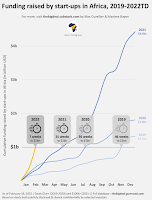
While I agree with the authors of Morgan Stanley's newsletter that many investors are missing out on lucrative opportunities in Africa, there is evidence this is changing. As reflected in the chart at the top of this post, African startups raised $4.4 billion in 2021, which was more than 2.5 times the amount raised in the previous year, according to "Africa: The Big Deal," a website managed by Max Cuvellier and Maxime Bayen.

With respect to specific sectors, fintech startups raised $2.3 billion from investors last year (see chart below). While this sector captured 53% of funds raised, other key sectors such as energy, retail, healthcare, education, and logistics and transportation are also on the rise.


I do not completely believe the notion that institutional investors in America or Europe are investing in African startups because they see the market as a great investment opportunity. Their investment is a result of chasing higher yields since the average junk-bond yields in America and Europe are 5.1% and 3.3%, respectively, well below inflation. And while there is good reason to cheer the recent increases in investments on the continent and the revenues some of these startups are reporting, I am still waiting for announcements of profitability and successful exits through an initial public offering or acquisition. Nevertheless, as someone who has supported tech startups in Africa for over 20 years, I am optimistic that the trend in the number of investors, amount raised, and overall number of startups on the continent will continue to grow for years to come.

I look forward to future conversations with government leaders in Africa on how to reduce their reliance on commodities by investing in education and infrastructure. Such investments will only help their growing working-age population enjoy the fruits of a middle-class lifestyle.

What opportunities and risks are you seeing in Africa's startup ecosystem?

Aaron Rose is a board member, corporate advisor, and co-founder of great companies. He also serves as the editor of GT Perspectives, an online forum focused on turning perspective into opportunity.

February 17, 2021

AI Can Have a Transformative Impact in Low- and Middle-Income Countries, Says GSMA Report

"Around the world, artificial intelligence (AI) is automating functions and making new services possible with breakthroughs in cheap computing power, cloud computing services, growth in big data and advancements in machine learning (ML) and related processes," according to a study that aims to understand the current and potential use of AI by startups and small and medium enterprises (SMEs) in low- and middle-income countries (LMICs) in four regions: Sub-Saharan Africa, North Africa and South and Southeast Asia.

The report, which was produced by the GSM Association (GSMA), a UK-based organization representing the interests of mobile operators worldwide, asserts that "AI can radically alter and improve the way governments, organizations and individuals provide services, access information and improve their planning and operations."

Mapping "a sample of 450 start-ups by sector in alignment with the UN Sustainable Development Goals (SDGs) and, based on interviews with AI experts in LMICs," the report explores "trends and challenges in business models, barriers to innovation and the ethical and responsible use of AI." In doing so, the study answers the following research questions:
  • What is the status of AI use in LMICs?
  • Which sectors, geographies and business models are showing the most promise, and why?
  • What are some of the barriers to implementing AI solutions in LMICs?
  • How can AI be used ethically to accelerate the achievement of the SDGs?

Top AI use cases in LMIC include agriculture, administration and business processes, cities and infrastructure, climate change, disaster management, education, finance and microlending, government and public services, healthcare, and identity. In explaining the use cases by sector verticals, the report says: "Business intelligence and analytics had the highest number of use cases as it captures a wide range of business-to-business (B2B) solutions, from enhanced retail market analysis and predictive decision making to customer service. Customer service chatbots, automated IT consulting, big data analytics and automated records are some examples of AI use cases."

As for healthcare, this rapidly growing sector "had the second highest number of use cases and clearly benefits from AI solutions, including sophisticated diagnosis and treatment options, hospital management systems, lifestyle change recommendations and healthy eating habits." The report further notes that "[f]ood and agriculture, financial services, education and retail and consumer goods followed these sectors. Food and agriculture employs a range of AI-based services, including services for identifying and remedying crop diseases, linking producers more effectively to buyers and markets and helping farmers maximize crop yields based on climatic and soil conditions."


As for use cases by country and region, the report identified a few AI innovation hotspots (see map above). "India," for example, "was the most represented country in our sample. The country accounted for over 40 percent of the sample (180 use cases), indicating a high level of innovation and AI uptake in the country. Far more cases were identified in India, but were excluded due to limited alignment with development outcomes, apart from general economic development. Nigeria and South Africa were the next two most represented nations in the sample with 42 and 38 use cases, respectively. China was excluded from the study, along with the rest of East Asia, which are emerging as centers of AI innovation and investment. For example, in 2017, China submitted approximately 1,300 AI and deep learning-related patents, compared to 220 by the United States."

Data, ICT infrastructure and hardware challenges create barriers to implementing AI in LMICs. Such challenges include the availability, accessibility and quality of data, access to reliable and affordable internet, lack of access to sufficient computing power, increasing digital inclusion and connectivity including device access, ownership and capability, and unreliable power infrastructure.

Human capital and lack of funding and automation present additional barriers. According to the GSMA, "While there is growing access to upskilling and training in AI, many countries still lack a steady pipeline of home-grown talent and skilled AI development talent. [...] The lack of mentorship available to start-ups developing AI-based solutions is also a constraint in many countries."

Regarding the lack of investment, the report explains that "AI-based solutions typically need a lot of investment. Unlike countries such as China and the United States, investment and funding are extremely limited in most LMICs. Countries in Africa and South and Southeast Asia that appear to have higher levels of investment include India, Kenya, Malaysia, Thailand and South Africa."

On the topic of the ethical use of AI in LMICs, the report points out that "To genuinely contribute to the SDGs, AI innovators need to eliminate the potential negative impacts of their AI processes. AI applications should be ethical by design to prevent and mitigate any potential negative impacts on users, workers, communities and the environment."

Moreover, "The application of existing laws, regulations and privacy principles, such as the GSMA Mobile Privacy Principles, can help mitigate privacy and ethics risks associated with AI. In addition to these frameworks, the GSMA recommends the adoption of the following principles by all stakeholders using AI for social good."
  • "Do no harm: Development and deployment of AI systems should respect human rights and should not cause human rights harm to individuals or groups. Particular care should be given to preventing harm to vulnerable individuals or groups."
  • "Be inclusive: AI stakeholders should support inclusion and equity, and should strive to ensure that the benefits of their AI-based technologies are broadly accessible.
  • "Be fair: AI systems should incorporate human oversight. All stakeholders should strive to ensure that the data used in AI is accurate and not unfairly biased. AI should not be used to make decisions that may affect any group or individual in an unfair or discriminatory way (e.g. discrimination based on protected characteristics such as race, gender, etc.).
  • "Ensure transparency: Individuals should be informed when they are communicating with AI-powered systems instead of a human (e.g. conversational AI). Decisions made with AI should be clearly explained to the individuals affected.
  • "Embed accountability: All AI stakeholders should be accountable for their use of AI and should promote these principles with the third parties they engage for social good purposes.
  • "Adopt privacy and ethics by design: AI systems should be designed and deployed according to privacy and ethics by design ethos or methodology at each stage of the life cycle, with input from relevant teams.
  • "Advance security and safety: Access to AI systems and their underlying data should be controlled and subject to audits or other accountability measures. State-of-the-art security measures should be used wherever possible. All AI experts and practitioners should implement best practices in security.
  • "Support sustainability and societal well-being: Sustainability and societal well-being should be considered in the development and deployment of AI systems."

Maintaining business interests in many of the countries covered in this report, I concur with the GSMA that AI can have a transformative impact on LMICs. Such transformation, however, will require investments from the private sector and governments to overcome the aforementioned barriers to implementing AI. What is more, media sources are starting to present reports about the misuse of the technology. It is imperative that all stakeholders using AI adopt the GSMA's recommendations for using AI for social good.

Do you agree with the report's findings? How are you engaging in the development of AI solutions in LMICs?

Aaron Rose is a board member, corporate advisor, and co-founder of great companies. He also serves as the editor of GT Perspectives, an online forum focused on turning perspective into opportunity.

January 23, 2021

Report Explores How Digitalization Can Create Quality Jobs in Africa and Contribute to Achieving the African Union's Vision for the Continent's Development

"COVID-19 poses an unprecedented threat to financing Africa's development by creating new risks and exacerbating pre-existing vulnerabilities," according to a report jointly prepared by the African Union's Commission for Economic Affairs and the OECD Development Centre with support of the European Union. More encouragingly, however, the report explains that the COVID-19 crisis is strengthening "the role of digitalization in contributing to Africa's productive transformation and in fulfilling Agenda 2063, the African Union's vision for the continent's development."

Africa's Development Dynamics 2021: Digital Transformation for Quality Jobs is a fact-filled annual reference book that "brings readers the latest information on development policies on the African continent and its five regions" – Central, East, North, Southern and West Africa. Furthermore, "It presents a new narrative assessing Africa's economic, social and institutional performance in light of the targets set by the African Union's Agenda 2063. This third edition of Africa’s Development Dynamics explores how digital transformation creates quality jobs and contributes to achieving Agenda 2063, thereby making African economies more resilient to the global recession triggered by the COVID-19 pandemic."

The report's Executive Summary importantly notes that "governments can drive Africa's digital transformation and trigger large-scale job creation, including outside the digital sector, through four complementary actions:
  • "Promote the dissemination of digital innovations beyond large cities through place-based policies. Ensuring universal access to digital technologies calls for enhancing coverage, affordability and the availability of suitable content. Internet access has expanded thanks to the growing prevalence of mobile phones: 72% of Africans now use them regularly, with the highest number in North Africa (82%) and the lowest in Central Africa (63%). However, digital adoption remains unequal across genders, income groups and other groupings. Only 26% of the continent's rural dwellers use the Internet regularly, compared to 47% of its urban inhabitants.
  • "Prepare Africa's workforce to embrace digital transformation and guarantee social protection. By 2040, own-account and family workers will represent 65% of employment under current trends. The share of own-account and family workers will be the highest in West Africa, accounting for 74% of employment in 2040, and the lowest in North Africa at 25%. Presently, 45% of youth feel their skills are inappropriate for their jobs. The apparition of new livelihoods on the web requires setting solid regulatory schemes and providing social protection for informal iWorkers.
  • "Remove barriers to innovation that prevent smaller firms from competing in the digital age. Dynamic small and medium-sized enterprises (SMEs) need support to adopt the most appropriate digital tools for innovation and trade. For example, having a website is positively associated with a 5.5% increase in the share of direct exports in firms' sales. Only 31% of firms in Africa's formal sector have a website, compared to 39% in Asia and 48% in Latin America and the Caribbean. Today, only 17% of Africa's early-stage entrepreneurs expect to create at least six jobs, the lowest percentage globally. Enticing these firms to scale up is critical for job creation.
  • "Deepen regional and continental co-operation for digital transformation. Digital technologies pose new challenges to national regulators. Supranational co-operation can provide solutions in areas such as digital taxation, digital security, privacy, personal data protection and cross-border data flows. Harmonizing continental and regional regulations is an important complement to national laws. As of today, only 28 countries in Africa have personal data protection legislation in place, while 11 have adopted substantive laws on digital security incidents."

To support the four recommended actions above, the report presents the main policy areas for digital transformation for each of the five regions:

Central Africa
  • Co-ordinate investment in digital infrastructure regionally to expand coverage and ensure inclusive and reliable access.
  • Equip the workforce with the adequate skills to facilitate the school-to-work transition and reduce the skills mismatch.
  • Leverage digital technologies to promote entrepreneurship and foster the digital transformation of regional value chains.
  • Implement, monitor and evaluate digital strategies at the regional and national levels.

East Africa
  • Facilitate the school-to-work transition, notably through digital literacy and technical and vocational education and training (TVET) programs, and monitor technological developments to anticipate future skills requirements.
  • Nurture digital entrepreneurship and innovation by adapting the regulatory environment, and promote technology parks, notably through easier financing.
  • Strengthen regional co-operation on digitalization, and mobilize public and private resources for regional infrastructure.
  • Set up a single digital market by promoting seamless connectivity, harmonizing regulations and facilitating the interoperability of cross-border payments.

North Africa
  • Support the development of financial technology by loosening regulatory constraints and experimenting with new regulations (e.g. sandboxes).
  • Modernize education and training systems by monitoring and evaluating digital literacy and programs for science, technology, engineering and mathematics, and promote lifelong learning and reskilling of the workforce.
  • Encourage digital entrepreneurship by fostering innovation through public-private partnerships and improving governance in the region.

Southern Africa
  • Reduce the digital divide by developing reliable and affordable digital infrastructure beyond urban centers.
  • Improve the quality of education and promote lifelong learning to meet future skills demand.
  • Harmonize existing digital initiatives at the national and regional levels, and accelerate their implementation, targeting the digital transformation of strategic value chains.

West Africa
  • Strengthen government support to technology parks and start-up incubators, and monitor progress.
  • Implement supportive regulatory frameworks to develop fintech, foster financial inclusion and diversify sources of financing for private sector development.
  • Support entrepreneurs and SMEs in using digital technologies, especially in agricultural sectors, to strengthen their integration into regional and global value chains.
  • Invest in human capital to align skills with future market needs, and promote TVET through strategic partnerships with the private sector.

Regarding cybersecurity, the report reveals that "Only a fifth of African countries have a legal framework for cybersecurity (digital security), while just 11 countries have adopted substantive laws on cybercrime (digital security incidents)." What is more, "In 2014, the 23rd Assembly of the AU Heads of State and Government adopted a Convention on Cybersecurity and Personal Data Protection as a first step towards continental co‑operation. Yet, as of June 2020, only 14 AU member states had signed it, and 5 had ratified it (Ghana, Guinea, Mauritius, Namibia and Senegal). This is still far from the 15 ratifications required for the Convention to enter into force."

And addressing the urgency for cooperation in digital security, the report asserts that the "cost of cybercrime in Africa is increasing and brings the risk of holding back Africa's digital revolution. Several assessments show that Africa's online ecosystem is one of the most vulnerable in the world."

Lastly, the report includes an editorial authored by H.E. Moussa Faki Mahamat, Chairperson of the African Union Commission, and H.E. Angel Gurría, Secretary-General of the Organization for Economic Co-operation and Development, which says, in part, "For Africa’s economic recovery to be sustainable, the digital transformation must be felt in all of the continent's priority sectors. This will require the commitment of all stakeholders, both private and public, and of the continent's partners."

What are your recommendations for how to stimulate the digitalization of economic sectors to kick-start a new growth cycle after COVID-19?

Aaron Rose is a board member, corporate advisor, and co-founder of great companies. He also serves as the editor of GT Perspectives, an online forum focused on turning perspective into opportunity.

August 22, 2020

Microsoft's Recommendations for Nigeria's Digital Transformation

According to a paper published by Microsoft, "The ubiquity of technology and the Fourth Industrial Revolution (4IR) is revolutionizing business and society in everyday life. The transformational changes of technology addition and the Fourth Industrial Revolution impacts social, economic, political and security dimensions."

Not only are we seeing the early benefits from the Fourth Industrial Revolution in developed markets, it may provide a great impact on those living in developing countries worldwide. It was with great interest that I read Enabling a Digital Nigeria: A Position Paper of Microsoft's Vision for Digital Transformation and a Digital Economy that Works for Everyone, which presents "digital transformation as a means for social and economic development in Nigeria to enable every Nigerian citizen and business achieve more."

Through this paper, Microsoft recommends "twenty (20) policy interventions across four (4) policy areas for the Government to promote a digital Nigeria in such a way as to optimally harness the opportunities of the fourth industrial revolution. The recommendations highlight the gaps that need to be closed to ensure we can capitalize on the benefits of the digital economy. Transforming Nigeria using technologies will require developing a digital ecosystem, infrastructural enhancements in the policy and regulatory environment, education sector and national security. Finally, without deliberate efforts to improve people's national digital awareness and inclusion, both in the private and public sectors, the benefits will be limited."

Below are some of Microsoft's recommendations aimed to drive cloud adoption in the country, which would catalyze the digital transformation of public institutions:
  1. To sustain the traction of a cloud-first policy and other digital transformation initiatives, Government efforts to increase digital and cloud capabilities of the public service are important. The Government should amplify communications of its commitment and support of ICT policies within an enabling environment.
  2. Build digital and AI capacity through the creation of AI knowledge centers across the country as well as the enhancement of scientific research on AI adoption.
  3. Government must optimize its data ecosystem through the development of multi-domain open data repositories that will enhance citizen interaction and amplify the country’s emergency response infrastructure.
  4. Government should ensure technology adoption barriers like costs are fair to all socio-economic groups and offer support and provision of digital applications in sectors such as education and healthcare.
  5. To implement the NITDA’s e-Government Interoperability Framework across the public sector. This provides uniform standards to follow in ICT adoption that will optimize government’s role in driving sustainable development.
  6. Adapt the national education curriculum and delivery methods to align with 4IR and develop digital and non-digital skills such as critical thinking.
  7. The passage of data protection laws unique to the Nigerian context that aligns with cutting-edge technologies, is technology neutral, and balances innovation with protection.
Having witnessed West Africa's technological transformation over the past decade, I concur with the report's conclusion: "The fundamental difference between digitally competitive nations has less to do with technology, but more to do with the transformative strategies that complement digital-savvy leadership, digitally skilled citizens and a collaborative digital culture. By immersing these elements within a conducive policy enabling environment, the Nigerian government can create a sustainable technology ecosystem that will drive digital transformation."

The Fourth Industrial Revolution is presenting a great opportunity for the next generation of Nigerians seeking to participate in the knowledge economy. Microsoft's recommendations provide a strong, stable path for the country's digital transformation. As the report encouragingly says: "We hope this contribution will provide a roadmap for Nigeria to achieve social and economic development goals and derive her share of the $11.5 trillion global digital economy."

Do you agree with the report's recommendations?

Aaron Rose is a board member, corporate advisor, and co-founder of great companies. He also serves as the editor of GT Perspectives, an online forum focused on turning perspective into opportunity.

July 29, 2019

Mobile Connectivity Continues to Transform the Lives of Millions of People Across Sub-Saharan Africa

By 2023, mobile's contribution to Sub-Saharan Africa's economy "will reach almost $185 billion (9.1% of GDP) as countries increasingly benefit from the improvements in productivity and efficiency brought about by the increased take-up of mobile services," says a report produced by GSMA Intelligence, the research arm of UK-based GSMA.

Furthermore, "The informal economy accounts for a large part of the mobile ecosystem in Sub-Saharan Africa. Almost 1.2 million of the 1.7 million directly employed by the mobile ecosystem are informally employed in the distribution and retail of mobile services."

The Mobile Economy Sub-Saharan Africa 2019 states: "Mobile-enabled platforms are increasingly disrupting traditional value chains in different verticals across the region. These platforms – mostly developed by a rapidly expanding local tech start-up ecosystem – aim to eliminate inefficiencies in conventional business models, as well as extend the reach of services and provide greater choice to customers."

The report also reveals that:
  • Around 239 million people, equivalent to 23 percent of the region's population, use the mobile internet on a regular basis;
  • Smartphones accounted for 39 percent of mobile connections in Sub-Saharan Africa in 2018, forecast to increase to two-thirds of connections by 2025;
  • 3G will overtake 2G to become the leading mobile technology in Sub-Saharan Africa this year;
  • 4G will account for almost one in four connections by 2025. However, 4G uptake is being dampened in some markets by the high cost of 4G devices and delays in assigning 4G spectrum;
  • The region's mobile operators are increasing investment in their networks and are expected to spend $60 billion (capex) on network infrastructure and services between 2018 and 2025 – almost a fifth of this total being invested in new 5G networks; and
  • Sub-Saharan Africa's mobile ecosystem supports around 3.5 million jobs, directly and indirectly, and last year contributed almost $15.6 billion to the funding of the public sector through consumer and operator taxes.
With respect to supporting sustainable development through mobile-enabled services, the report points out that "[a]s the final decade of the UN Sustainable Development Goals (SDGs) approaches, mobile technology will play an increasingly important role in accelerating progress. The impact of mobile will be particularly profound in developing regions, such as Sub-Saharan Africa, which face an uphill task to achieve the goals due to acute resource and infrastructure shortages. The mobile industry's support for the SDGs is demonstrated in three main ways:
  • Deployment of infrastructure and networks: The mobile industry drives impact through the provision of – and investment in – high-performing mobile networks, which provide the foundations for the digital economy and act as a catalyst for a diverse and innovative range of services.
  • Access and connectivity: Mobile operators are continuing to connect the unconnected; across Sub-Saharan Africa, the mobile industry has connected 62 million new mobile subscribers and 90 million new mobile internet subscribers since 2015.
  • Enabling services and relevant content: Mobile connectivity continues to transform the lives of millions of people across the region, by enabling the delivery of life-enhancing services, including education, health and financial inclusion. This is especially significant given the challenge of providing services by conventional means amid considerable infrastructure and funding gaps."
The report also explains that "[a]rtificial intelligence (AI) and blockchain – two of the most widely discussed transformative technologies over the last three to five years – are beginning to attract considerable interest in Sub-Saharan Africa. In April 2019, Google opened its first AI Lab center in Africa, located in Accra, Ghana, in addition to supporting machine intelligence programs at the African Institute for Mathematical Sciences center in Rwanda. In May 2019, Microsoft launched its Africa Development Center (ADC) with two initial sites in Nairobi, Kenya and Lagos, Nigeria, with local developers expected to focus on transformative technologies, such as AI and machine learning. AI and blockchain have the potential to help address a variety of social and economic challenges in the region, as evidenced by some of the use cases and applications being implemented."


What mobile solutions do you think will transform the lives of millions of people across Sub-Saharan Africa? Do you agree that AI and blockchain have the potential to help address a variety of social and economic challenges in the region?

Aaron Rose is a board member, corporate advisor, and co-founder of great companies. He also serves as the editor of GT Perspectives, an online forum focused on turning perspective into opportunity.

March 12, 2018

Report Explores How Best to Prepare K-12 Students for the 21st Century Workplace

The previous post on this blog focuses on a report published by The Economist Intelligence Unit (The EIU) and sponsored by Google for Education that addresses the need to prepare students with the necessary skills for a successful future. This post focuses is on a subsequent report, Fostering exploration and excellence in 21st century schools, by The EIU that "discusses the results of a study that explores how to best prepare primary and secondary school (referred to in this report as 'K-12') students for the 21st century workplace ('the modern workplace'), where a mix of hard and soft skills are crucial for success. The research, sponsored by Google for Education, draws on a survey of 1,200 educators in 16 countries. It looks at the strategies most effective in developing 21st century skills and how technology can support such efforts."

The EIU's "latest study suggests that a holistic approach, integrating different educational strategies and techniques, is most effective for developing the skills needed for success. Among these, it includes empowering teachers by giving them greater autonomy to innovate and applying teaching strategies that engage students through hands-on and collaborative activities. Implementation of these initiatives faces numerous complex challenges, including resource limitations, but failure will leave many of today's young students unprepared for the life and work challenges they will face as economies and societies develop." Listed below are the research's key insights:

A range of teaching strategies is needed to effectively deliver the types of learning needed to prepare students for the 21st century workplace.
"A large majority of educators surveyed (79%) believe that soft skills need to be developed alongside foundational literacies. Educators most frequently cite the following teaching strategies as 'very importan;” in developing the skills needed in the 21st century workplace: active learning (51%), project-based learning (45%), cognitive activation (42%) and personalized learning (40%). Educators also consider these four strategies as proven to be the most effective in developing needed skills."

Technology can support the effective execution of teaching strategies by promoting interaction, engagement and communication.

"Four in five (82%) educators agree that technology is a valuable tool for developing skills for the modern workplace. Technology is seen as most effective in enhancing the top teaching strategies for developing 21st century skills, as it can be used to promote interaction, engagement and collaboration."

Teacher quality is key. Teacher autonomy also matters and is a significant factor in shaping schools’ preparedness to teach 21st century skills.
"Good teachers need a supportive framework to make the most of their talents, including adequate resources, training and a well-planned curriculum. There is a strong correlation between the degree of autonomy teachers enjoy and schools' readiness to teach 21st century skills. Educators who assessed their schools as having 'much better' teacher autonomy than other schools in their country far more often report being 'very well equipped' to teach both foundational literacies and soft skills, such as communication (48% v 25% for the rest of the sample)."

Budget limitations are the most frequently cited obstacle in adopting new strategies and technologies.
"Educators most frequently cite budget limitations as by far the most significant barrier to adopting both new teaching strategies (51%) and technologies (53%). A lack of technology access in schools and policy gaps are also notable challenges. On a regional level, budget constraints remain a top challenge for innovation, with North American educators most often reporting these as an obstacle to adopting new strategies (59%) and technologies (61%)."

Educators most often favor a cautious approach to adopting new teaching strategies and technologies.
"Opinions vary over how quickly schools should innovate within the classroom. However, educators most often advocate a cautious approach for implementing new teaching strategies (39%) and technologies (40%), allowing for each to be investigated and tested before adoption."

I spend a significant amount of time learning about a variety of topics including future technology trends, successes and failures of businesses across a wide array of sectors including lessons learned by leaders of those businesses, and changes in various risks that may impact, positively or negatively, the performance of any business's. Being a lifelong learner is essential for any individual irrespective of their career stage.

Therefore, I appreciate the opening paragraph of the report's conclusion: "In the light of the transformational nature of new technologies on the world's economies, and the rapid pace of evolution of the technologies themselves, K-12 students of today have an urgent need for a new range of skills. As well as continued emphasis on fundamental literacies, they must develop critical thinking, creativity, collaboration and problem-solving skills, among others. Students will also need to learn how to continue learning as they progress through their professional lives. Their ability to do so is crucial for entire economies, as well as individuals."

Moreover, I concur with the concluding paragraph: "Crucially, teachers themselves are a vital resource with great potential for preparing young students for their working lives. But they need to be supported with resources such as relevant technologies and well-tested policies, as well as the time and space to learn themselves and plan activities geared towards fostering 21st century skills. Given the right tools, they can do the job of preparing the young students of today into becoming the successful working adults of tomorrow."

What strategies and techniques can educators implement in the classroom to support the development of essential skills K-12 students will need to succeed in the modern workplace?

Aaron Rose is an advisor to talented entrepreneurs and co-founder of great companies. He also serves as the editor of Solutions for a Sustainable World.

March 11, 2018

Problem Solving, Team-Working, Communication, and Critical Thinking: Preparing Students with the Necessary Skills for a Successful Future

"Evolving business needs, technological advances and new work structures, among other factors, are redefining what are considered to be valuable skills for the future," says a report published by The Economist Intelligence Unit (The EIU). "Determining what these are, however, is far from straightforward."

Sponsored by Google, Driving the skills agenda: Preparing students for the future summarizes the findings of a program embarked by The EIU "to examine to what extent the skills taught in education systems around the world are changing. For example, are so-called 21st-century skills, such as leadership, digital literacy, problem solving and communication, complementing traditional skills such as reading, writing and arithmetic? And do they meet the needs of employers and society more widely?

"To investigate these issues," the report explains, "The EIU convened an advisory board meeting of education experts and conducted a series of in-depth interviews. In addition to comments from the advisory board and the interviews, this report draws on data from global surveys of senior business executives, teachers and two groups of students, aged 11 to 17 and 18 to 25. The key findings are listed below."
  • Problem solving, team working and communication are the skills that are currently most in demand in the workplace;
  • Education systems are not providing enough of the skills that students and the workplace need; and
  • Some students are taking it into their own hands to make up for deficiencies within the education system.
The correctly notes that "the lives of today's students are very different from the lives of students for whom the existing education systems were developed. How can education best prepare young people to navigate their way through an increasingly interconnected and complex world in which factual recall will perhaps matter less than their ability to understand differing perspectives?"

Source: The Economist Intelligence Unit
Moreover, "Teachers, students and executives surveyed for this report all list problem solving as the most important skill for students' future. This emphasis is most pronounced among executives, fully 50% of whom place it at the top of the list for potential employees, while 70% expect its importance to increase over the next three years. Teachers appear to be acting on the growing necessity of problem solving, with 59% saying they have placed more emphasis on it in the classroom over the past five years."

As an employer, problem solving, communication, and critical thinking are the critical skills I find most valuable in those whom I consider hiring. The report explains that "if problem solving is to be prioritized as an educational goal, it needs to start early to be effective, teaching the most basic foundational skills with an eye to their practical application."

In addition, it pleases me to learn that "businesses surveyed for this report concur: employers from both developed (US, UK, Canada…) and developing countries (China, Brazil, Mexico…) place problem-solving at the top of their list of critical skills.

"By encouraging students to work out answers for themselves and to think of the applications and consequences of a theory or decision rather than accepting an answer they are given, schools can build problem solving skills into the way students learn throughout their education. Across the curriculum, students can be encouraged to identify a problem and generate potential solutions through discussion and evaluation, a method which ensures that they fully understand the answer they arrive at."

While I agree team-working is an essential skill, I equally value my colleagues' ability to work independently. Self-motivation and self-regulation are additional skills that I appreciate. This article by Northeastern University provides a good discussion on working independently.

With respect to communication skills, the report importantly notes communication "means different things to different people. Effective oral communication is a fundamental tool to function in both work and society more broadly, but some employers fear that equally vital written communication skills are being lost." Sir John Daniel, a global leader of education, poignantly says, "Communication as it's referred to today tends to mean oral communication, but then you have employers complaining that people can’t write a coherent sentence."

I consider written communication to be an effective tool for thoroughly analyzing a problem and developing a viable solution. I find myself increasingly frustrated that people have become more dependent in creating PowerPoint presentations for written communication. Bullet points are an inadequate method for effective communication.

What is more, effective team-working, in my experience, is derived from thorough oral and written communication by each member of the team.

On the question of how are skills of the future best taught, "According to experts interviewed for this report, 21st-century skills cannot be taught in isolation. In order to be effective, they must be integrated into every subject area, so that skills development becomes inseparable from the sharing of knowledge."

What are the most critical skills should employees possess today and in the near-term? What is the best method to teach these skills?

Aaron Rose is an advisor to talented entrepreneurs and co-founder of great companies. He also serves as the editor of Solutions for a Sustainable World.

June 17, 2017

Report Explores How Technology Investments in 20 Countries Can Increase Access to Finance, Healthcare and Education, and Enhance Digital Inclusion

"Technological advances and globalization have led to major advances for many, but have seen others' income and well-being stagnate or even decline," according to a report developed by The Economist Intelligence Unit (EIU) with the Morgan Stanley Institute for Sustainable Investing. "These disparities, both real and perceived—and, more broadly, how to make growth inclusive—are some of the greatest challenges facing the world today."

The purpose of the Inclusive Growth Opportunities Index 2017 is to explore technology investments in 20 countries that can increase access to finance, healthcare and education, and enhance digital inclusion. The report's key findings is copied below in its entirety:
  • Investment opportunities in support of inclusive growth are found within the pillars of inclusion: finance, healthcare, education and gender equity. Technologies like remote diagnostics, mobile financial services, optimized transportation and delivery, and adaptive learning all have the potential to radically improve economic inclusion. Opportunities for private investment within these pillars are present in all countries examined, but the characteristics of each country's inclusion (or exclusion) patterns often determine the form of opportunity.
  • Financial technology inclusion opportunities are of particular note in Rwanda and Bangladesh (for risk-tolerant investors). For more risk-adverse investors, attractive markets for financial-inclusion solutions are found in advanced economies, specifically in improving affordability of housing and day-to-day purchases in places like the UK, the Netherlands and the US.
  • Healthcare technology inclusion opportunities are strong in Nigeria, Kenya and India, with Nigeria leagues ahead of the other two in terms of its needs for inclusive healthcare—though it is one of the riskiest markets assessed for investment. Among the developed economies, Israel (high and growing out-of-pocket expenditures) and Saudi Arabia (lagging health outcomes for an advanced economy) offer potential opportunities.
  • Education technology inclusion opportunities are strong in India and China, which have large gaps in basic education despite reputations for high workforce technical expertise and large pools of science, technology, engineering and mathematics (STEM) graduates. In high-income economies like the UK and the Netherlands, education opportunity is strongly tied to employment market woes, including high youth and long-term unemployment.
  • Gender inclusive technology investments cut across the finance, healthcare and education sectors. Basic access to technology is perhaps the biggest issue for gender inclusion, particularly in India and Turkey, which rank as the least-inclusive technological access markets for women.
  • Investable technologies have much in common across markets, supported by the intuitive interfaces and simple offerings of modern information and communication technologies (ICTs). That said, local market features generate unique opportunities to leverage technological platforms. For example, products related to remittance payments have larger markets in countries where in-bound and out-bound migration is high. Drones for medical supply delivery and insurance for smallholder farmers may be in greater demand in developing markets. Advanced economies may see bigger markets for online product aggregators or mobile apps that make personal financial security more accessible.
  • Understanding local needs matters for maximum impact. The investable technologies will have greater impact on inclusion where they bring previously unserved populations into the market, and a smaller impact on inclusion where they are substitutes for existing services.
  • Digital divides remain prevalent, even in advanced economies, offering both challenges and opportunities. For example, in Australia, around 40% of low-income people lack broadband access because of the cost. In Cuba only 6% of households have internet access, despite a well-educated population with a high level of technical ability.
  • In developing markets, technology provides significant leapfrog potential and the ability to overcome obstacles presented by underdeveloped physical infrastructure. The most successful investments, however, rely on uptake and sustained use, which may require ancillary support in areas like electricity provision and digital literacy.
  • In the least-developed markets, potential payoffs from technology-based solutions are tempered by lack of basic services like energy, clean water and sanitation. In Kenya, more people have access to a mobile phone than to clean water. Gaps in vital infrastructure have far-reaching implications for growth and inclusiveness; alongside the core human development benefits, bridging such basic gaps opens new potential markets for more technology-based inclusiveness solutions.
In addition to the report, an interactive Excel dashboard allows users to explore the data in a variety of ways:
  • Use comparison tools to contrast different countries, regions and income groups;
  • Look at profiles for each of the 20 countries in the Inclusive Growth Opportunities Index 2017;
  • Delve deeper into the index, leveraging its wealth of data to develop unique and actionable intelligence tailored to your specific priorities and interests; and
  • Adjust the weights for each category and indicator to tailor the rankings to your specific risk preferences.
Importantly, the report concludes that:
Looking ahead, the inclusiveness challenges facing the world are great. Reaching the ultimate goal will require cooperation and coordinated action across multiple spheres, including government, international organizations, NGOs and philanthropy, alongside the private sector. In this study, we have aimed to highlight the role that private investment can play– and the unique opportunities available for the private sector decision-maker – to support inclusive growth. The analytic framework and user-friendly dashboard tool enable investors to explore specific areas of interest and identify where investment opportunity is strongest. We hope that this is one step along a more comprehensive journey to a sustainable, inclusive global economy.
Does the report and interactive dashboard help you find investment opportunities that drive impact on inclusive growth in the areas of finance, education, healthcare and gender?

Aaron Rose is an advisor to talented entrepreneurs and co-founder of great companies. He also serves as the editor of Solutions for a Sustainable World.

February 1, 2017

How MBA Study Changes the Way I Think

The following is a guest post by Yan Tang

In January 2016, on my 27th birthday, I received a letter from Seattle University informing me I have been accepted to the Professional Master of Business Administration program at the Albers School of Business and Economics. When my celebration woke up the whole household, I knew I was not crazy. I was just trying to tell everybody, my birthday wish became true: I could go all the way to United States studying as an MBA student.

Time has gone too soon. After one year, I remain excited of living and studying in a different country. I could not help to think lately that in my MBA program, what I have changed after one year study?

So many things have changed: lifestyle, networking, expectations, etc. However, fundamentally, it is the change of the way I think that really makes a big difference in both my life and career pursuit. I call it independent thinking.

Our MBA students usually are assigned to do a lot reading before classes, and to write reflections or summaries based on the reading. Then students need to prepare ideas or thoughts for open discussions during classes. It is always amazing to hear the furious discussions or even debates between students or between professors and students. There are no right or wrong answers, as long as you have evidence your arguments; and everyone is encouraged to express opinions and raise questions. In this process, students learn to find relevant information to form our own opinions instead of depending upon others. In addition, the independent thinkers are able to go a step further to think critically or strategically.

I grew up with the China education system where students are used to being told how to complete tasks. Independent or creative thinking might not be appreciated. In another word, it is disrespectful to challenge teachers' authority. So students usually depend on solutions offered by teachers.

Back to the time as a junior student in college, I was appointed as a project coordinator in the Austrian Pavilion in Shanghai Expo 2010. Supervising around 60 staff who are much senior than me, I was in panic every day as I expected someone to tell me how to manage these employees in a right way. Even though I worked very hard to make sure everything went on smoothly, I did not think independently or strategically as a leader is supposed to do. I did not think about what was my expectations to myself and to the whole team, what was the goal we should achieve, and how was that job linked to my future career.

Things could have been done so much differently but I did not know that back to 2010. However, studying for an MBA makes me realize the importance of independent thinking to approach problems differently. If I were in that situation again, I would take advantage of it to act as an independent thinker to understand different backgrounds and perspectives bring different ideas and solutions.

Interestingly, many people make changes by inside or outside classroom learning.I am glad that I consciously have made this change through my MBA study, and I appreciate the value of thinking independently to generate your own thoughts and expressing your thoughts bravely. Especially if you are a team leader, being a hard worker is not enough. It is essential for you to be able to think independently and strategically.

Halfway through my MBA program, there are still so many things to learn and so many goals to achieve. Having developed the ability of independent thinking, I feel confident when facing complex situations in life as I know I will keep calm and find solutions for problems. It is the same when it comes to pursuing my career. I will no long expect to be told what job I should take, instead, I would think independently to analyze my strengthens when applying for positions and to seize the opportunities.

Yan Tang is enrolled in the Professional Master of Business Administration (Marketing) program at Seattle University. She also serves as a Business Relationship Management and Small Business Coach at Seattle University's Innovation and Entrepreneurship Center. Previously, Ms. Tang worked for Manpower in the company's Shanghai, China office where she served in several roles including Service Consultant, On-Site Project Manager for IBM Shanghai, and Recruitment Consultant. Ms. Tang may be contacted at yantang1126@gmail.com.

February 1, 2011

Competition Connects University Students to Emerging Capital Markets in Africa

University or college students located worldwide may participate in the African Stock Investment Competition (ASIC). Sponsored by Afribiz, Africa investor, South African Chamber of Commerce in America, and Universal Creativ Solutions, the ASIC offers students who are at least 18 years of age the opportunity to learn firsthand about African capital markets. For the 2011 competition, U.S. students will have their first opportunity to gain an inside look at emerging market stock exchanges in Africa, while competing to win cash and prizes by building the best performing stock investment portfolio.

The ASIC website explains the two levels of competition. In the ASIC Level 1 Individual Competition, a series of quizzes are conducted February 2011 through May 2011. For each quiz, students who take the quiz and score 100 percent will be placed in a pool to receive a prize. Awardees are chosen randomly from the pool of students who scored 100 percent on the quiz. At least one awardee will be chosen for each quiz.

In the ASIC Level 2 Team Trading Competition, teams of students consisting of two to four students compete against each other by developing high growth stock portfolios of six months (March 1 through September 30, 2011) on a virtual trading platform (university.jse.co.za), which shadows the Johannesburg Stock Exchange. No real currency or assets are involved. The teams that have the three best performing portfolios (based on rules guiding the virtual trading platform) as of September 30, 2011 will be awarded first, second, and third place respectively.

For each quiz competition in ASIC Level 1 Individual Competition, awardee(s) will receive an undisclosed prize with a value of less than $100.00. For ASIC Level 2 Team Trading Competition, winning teams receive the following cash prizes:
  • 1st Place Team – $1,500.00
  • 2nd Place Team – $1,000.00
  • 3rd Place Team – $500.00
Registration deadlines for the ASIC Level 1 Individual Competition and ASIC Level 2 Team Trading Competition are 20 February 2011 and 26 February 2011, respectively. Additional information may be found at www.africanstockcompetition.com/competition-registration.

March 7, 2010

Student Loans as Development Aid

While I am a supporter of the microfinance concept, namely, the access of basic financial services such as loans, savings, money transfer services and microinsurance by underserved populations, I am critical of the application strategies employed by microfinance institutions (MFIs). I am pleased, however, to discuss the workings of an organization that is effectively administering small loans to help students in the developing world achieve a college education or vocational training.

Vittana recognizes that the students benefiting from microloans ordinarily could not receive loans to finance their education from local banks. The Seattle, Washington-based nonprofit organization partners with local microfinance organizations to establish student loan programs—often providing the only access to college loans. Through Vittana’s website, individuals are able to lend $25 and $50 at a time to individual students. Currently, Vittana, which is an Indian word for “seed,” has active partnerships in five countries: Mongolia, Nicaragua, Paraguay, Peru and Vietnam.

I had the opportunity to attend an event organized by SeaMo in November 2009 that featured Vittana’s co-founder and chief executive officer, Kushal Chakrabarti. One issue Mr. Chakrabarti discussed was the focus to provide student loans rather than scholarships. He said, “Students do not want a hand-out, they want a hand up. A loan enables them to go to school without feeling beholden.” He explained that small monthly payments provide an easy way for students (borrowers) to repay the money. In fact, many students actually begin repaying ahead of schedule, which represents their personal drive for financial responsibility.

Recognizing the impact of education, Mr. Chakrabarti said, “Education is income generating; more than microfinance (small loans for entrepreneurs).” In the developing world, a college graduate can earn 200-300 percent more than they would have otherwise. However, there are less quantifiable measurements that have an equal impact to the college graduate, their family and surrounding community. Single mothers gain self-confidence by receiving a college education or vocational training. Not only is she acquiring the skills to obtain a skilled job with a higher income, but she is becoming a role model to her children and perhaps other single mothers in the community. Moreover, communities become stronger by having some of its residents possess an education in high-valued professions such as teaching, medicine, engineering or law.

During his presentation, Mr. Chakrabarti noted that the typical borrowers are 18-25 years old, loan amounts range from $500-$1,500 and repayment periods last from 6-24 months with a successful repayment rate of 97-98 percent. While the interest rates vary from region to region, Vittana’s partners usually charge a 10-15 percent annual rate. And to mitigate the loss of the loan, most partners require that a close relative co-sign on the loan. It is rare that a student is unable to repay the loan him or herself, but in the case that the student has difficulty making a payment, a parent, grandparent, or spouse will ensure that the student repays on schedule.

It is important to note that donors providing funds (loans) to students through Vittana are not making a charitable donation; the loan will be returned to the donor upon repayment by the student. Upon repayment, the donor will have the option keep their money or make a loan to another student. How does Vittana generate revenue? Although not required, many people make a donation beyond the loan amount help Vittana cover their costs. Vittana also received direct financial support from individuals and foundations such as the Peery Foundation, the Mitchell Kapor Foundation, and the Crystal Springs Foundation.

Here is a video that highlights Vittana’s operations through testimonials of students receiving loans through this innovative application of microlending:

December 7, 2009

Microfinance 101

On December 2, 2009, I had the pleasure of making a presentation about microfinance to the Japanese Students Business Association (JSBA) at Bellevue College in Bellevue, Washington. My presentation focused on providing an overview, and outlining the benefits and challenges of microfinance. Upon sharing the highlights of the presentation with friends and colleagues, I learned that while many of us have heard the term "microfinance," very few understand its components. This post will provide a summary of microfinance and the people it serves. In a subsequent posts, I will discuss microfinance's benefits and challenges. (Photo of me with members of the JSBA is courtesy of Mr. Takahara Tsuyoshi)

I find the Washington, DC-based Consultative Group to Assist the Poor, CGAP, an independent policy and research center dedicated to advancing financial access for the world's poor, a great resource by explaining microfinance as a mechanism that "offers poor people access to basic financial services such as loans, savings, money transfer services and microinsurance." Having traveled around the world, whether in industrialized or developing countries, I agree with CGAP's assertion that people living in poverty, like everyone else, need a diverse range of financial services to run their businesses, build assets, smooth consumption, and manage risks."

Microfinance facilitates the accessibility of financial services to economically underserved populations. CGAP explains, "Poor people usually address their need for financial services through a variety of financial relationships, mostly informal. Credit is available from informal moneylenders, but usually at a very high cost to borrowers. Savings services are available through a variety of informal relationships like savings clubs, rotating savings and credit associations, and other mutual savings societies. But these tend to be erratic and somewhat insecure. Traditionally, banks have not considered poor people to be a viable market."

Many microfinance schemes are administered through a microfinance institution (MFI), an organization that provides financial services to the poor. MFIs include small nonprofit organizations that provide small loans, to commercial banks that, according to CGAP, "have large existing branch networks, vast distribution outlets like automatic teller machines, and the ability to make significant investments in technology that could bring financial services closer to poor clients." CGAP adds, "While this is a very broad definition that includes a wide range of providers that vary in their legal structure, mission, and methodology...all share the common characteristic of providing financial services to clients who are poorer and more vulnerable than traditional bank clients."

Ownership structures of MFIs vary from government-owned entities to member-owned credit unions or socially minded shareholders to profit-maximizing shareholders. In its summary about MFIs, CGAP says the types of services offered by MFIs "are limited by what is allowed by the legal structure of the provider: non-regulated institutions are not generally allowed to provide savings or insurance."

Who are the clients of microfinance? Most surveys report two-thirds of microfinance clients are women, which is very important considering women often have difficulty in accessing basic services. Microfinance clients, men and women alike, seek loans across for a variety of reasons including working capital for small provide businesses, larger loans for durable goods, student loans, and to cover emergencies. Microfinance clients work on farms or work for themselves in fishing, carpentry, vegetable selling, small shops, transportation, etc.

Microfinance offers a great opportunity for people to overcome the challenges of living in poverty. There are some benefits that are worth exploring, which include increasing personal income, enabling individuals to build assets, and reducing the vulnerability to economic stress. There are significant problems, however, with the application of microfinance such as little or no access for goods or services produced by borrowers to reach global (and more profitable) markets, extraordinarily high interest rates, and creating a cycle of debt as the entrepreneur attempts to manage (micro)enterprise growth. I will provide details and examples of the benefits of microfinance in a blog post on December 20, 2009 and I will discuss the challenges of microfinance on a posting dated December 22, 2009.

November 2, 2009

African Union Ambassador Visits Seattle Promoting Business Opportunities

I had the pleasure of meeting Amina Salum Ali, Ambassador of the African Union (AU) to the United States, during her visit to Seattle. Hosted by the Trade Development Alliance of Greater Seattle and the Africa Chamber of Commerce of the Pacific Northwest on October 27, 2009, Ambassador Ali gave a presentation titled "An Integrated Africa: An Overview of African Economies and the African Union." Since her appoint as the AU ambassador in 2007, this was the Ambassador's first trip outside of Washington, DC that focused primarily on promoting Africa as an investment opportunity. (Photo of Ambassador Ali courtesy of the Trade Development Alliance of Greater Seattle/Allison Peterson)

Ambassador Ali gave an excellent presentation outlining the economic benefits of investing in the African continent. Specifically, she noted the opportunities that exist in manufacturing, agriculture, mining, health care, transportation, and information and communications technology including using mobile phones for banking, education, and medicine. While Africa is not immune to the economic recession, said Ambassador Ali, many investors in Africa are seeing a positive return on their investment. She also encouraged investors to focus on establishing processing operations, which are greatly lacking throughout Africa. Not only is De Beers mining diamonds in Africa, Ambassador Ali noted, the diamond conglomerate is the only company processing its product (diamonds) locally.

Ambassador Ali highlighted the benefits of the African Growth and Opportunity Act (AGOA), which was signed into U.S. law in 2000. According to a website maintained by the U.S. Department of Commerce, http://www.agoa.gov/, AGOA "provides beneficiary countries in Sub-Saharan Africa with the most liberal access to the U.S. market available to any country or region with which we do not have a Free Trade Agreement. It reinforces African reform efforts, provides improved access to U.S. credit and technical expertise, and establishes a high-level dialogue on trade and investment in the form of a U.S.-Sub-Saharan Africa Trade and Economic Forum."

While acknowledging the humanitarian and military conflicts that exist in Africa, she reminded the attendees, who included several members of the African Diaspora that conflicts will dissipate as standards of living increase and people improve their lives through access to education, job training, medical services, and economic development support. She encouraged the African Diaspora to help promote the benefits of doing business in Africa by speaking positively about their home continent noting Africa's abundance of natural resources, vast landscapes, and diverse cultures.

I had the opportunity to ask Ambassador Ali two questions: (1) What is AU's strategy for combating corruption and properly training local government officials to eliminate corrupt practices that often impede economic development and (2) what legal recourse do investors have to resolve business disputes? In responding to the former, Ambassador Ali noted that many African nations have taken significant steps to combat corruption, which is evident by the regular media reports discussing the latest arrests or convictions. The broad media attention on Africa's corruption, she explained, is not about a failed system, but representative of effective actions and policies aimed to eradicate corrupt practices. She also noted the adoption of the "African Union Convention on Preventing and Combating Corruption" in 2003 and ongoing collaborative efforts between the AU and the World Bank.

With respect to second question, Ambassador Ali said that many local and regional courts have the capacity of handling legal cases to resolve business disputes. Moreover, some parties have opted to seek arbitration or have their cases heard in jurisdictions outside of the AU. I prefaced my question saying that many American investors may take the risk of investing in Africa where infrastructure may be limited, but their concerns reside in not understanding the options available to resolve business disputes.

Having traveled extensively throughout Africa, I know the benefits the continent has to offer for investors. While Ambassador Ali is correct in listing energy, health care, mining, agriculture, transportation, and manufacturing as ideal business opportunities, I favor the opportunities that exist in information and communications technology. As I often discuss on this blog, ICT and specifically mobile communications are producing substantial financial returns for investors and making a social difference for all of Africa.

I commend Ambassador Ali for making Seattle her first U.S. destination outside of Washington, DC to promote the business opportunities that exist in Africa. It is important that other diplomats and government officials representing developing nations take a more proactive approach in attracting foreign direct investment. Feel free to contact me if you are interested in learning more about the investment opportunities that exist in Africa. I am happy to share my experiences of doing business in one of the world's most diverse markets.

September 22, 2009

Workshop Focuses on Mobile Innovations in Developing World

Via webcast, I attended a workshop, "Mobile Innovations for Social and Economic Transformation," organized by the World Bank e-Development Thematic Group (e-TG), whose mission is to "promote the efficient use of ICT in development and World Bank operations by facilitating knowledge sharing on good practices in e-development, and an ongoing dialogue amongst a large and diverse community of practitioners." e-TG said the aim of this event was "to raise awareness of the transformational role mobile technologies can play in improving service delivery, efficiency and transparency by show-casing mobile-enabled innovations in a number of sectors and identifying emerging lessons learned and ways to scale up for achieving operational efficiencies and development impact." (Photo courtesy of Mobiles for Malawi)

This workshop addressed essential topics such as the mobile innovations in financial services, health, education, and governance, and mobile applications in agriculture and rural development. A detailed summary of the presentations may be found on ICT4D.at's blog. (I understand that Florian Sturm of ICT4D.at was providing the summary remotely from an Internet cafe in Ghana. Thank you, Florian.)

While the workshop covered a variety of topics, there were a few common conclusions. Although the capacity to utilize mobile broadband may be cost prohibitive in certain markets, mobile technology is a sustainable solution to educating people, providing medical diagnosis and increasing access to medical treatments, and developing an e-commerce solution to access financial capital and facilitate private sector development. Many of the presentations suggested increased investments to teach people the skills necessary to use and capitalize on the benefits of mobile technology and build the technological capacity required for a vastly expanding marketplace. As human and system capacity grows, the cost of mobile content delivery and devices required to utilize the content will continue to drop. In my opinion, developing nations must continue to deregulate the telecom sector and encourage private sector development including fair and equitable private-public partnerships.

The presenters agreed that the technology currently exists for mobile solutions, but there must be a focus on developing applications and refining business models. Although several successful projects were presented, there were general complaints that often such projects do not bypass the "pilot" stage and accordingly, do not achieve sustainability. Project scalability is another challenge people are encountering in implementing mobile solutions. According to the presentations and subsequent audience questions, impact evaluations and information sharing on project failures can help overcome these problems. Lastly, there is a need to further develop private-public partnerships and identifying viable and committed partners for implementing mobile solutions.

As the Internet has become a regular component to the daily lives of people living in developed countries, a digital divide has grown wide for those living in developing nations. However, over the past few years, I have seen innovative solutions to bridging the digital divide in the world’s most undeveloped nations. While there continues to be challenges in scalability, mobile technologies have and will continue to provide sustainable solutions. I commend the World Bank e-Development Thematic Group for organizing this relevant and informative workshop.

January 9, 2009

American Recovery and Reinvestment

President-elect Barack Obama recently gave a speech, "American Recovery and Reinvestment," at George Mason University in Fairfax, Virginia talking about his economic plan to save or create three million jobs by doubling the production of alternative energy; weatherizing 75 percent of federal buildings and two million American homes; digitalizing the country's medical records; updating thousands of schools, community colleges, and public universities; expanding broadband; and investing in science, research, and technology. (Photo courtesy of New Rushmore Radio)

I support Mr. Obama's plan to invest in America's infrastructure, but I disagree with his proposal to cut taxes. If taxes are cut, how will the president-elect fund infrastructure investments? Increasing the public deficit is not sound fiscal responsibility. No one likes to pay taxes, but I think many of us will feel more comfortable if our hard-earned tax dollars are invested more wisely.

An economic stimulus plan should balance the need to invest in public infrastructure and reduce the budget deficit. According a Congressional Budget Office (CBO) Analysis dated January 8, 2009, "The Treasury will report outlays of $1,032 billion through December 2008, CBO estimates, $319 billion more than in the same period last year." Furthermore, "The CBO estimates that the Treasury Department will report a federal budget deficit of $485 billion for the first quarter of fiscal year 2009, $378 billion higher than in the same period last year." I understand that it may be necessary to increase the country's deficit in order to invest in public infrastructure, but we must also take necessary action to minimize our debt burden.

I have written in this blog about how the "New Economy" includes a focus on the renewable energy and green technology sectors, which should increase America's competitive edge in a global economy. The healthcare technology sector is emerging and electronic health records will become a commonly-used tool in the coming years. It is imperative that we invest in these essential sectors and public infrastructure projects such as modernizing schools, fixing the country's transportation sector including repairing bridges and roads, expanding rail lines, and updating the national air traffic control system. However, the government (federal, state, and local) must manage our investments well and take necessary, and often difficult, measures to stabilize our deficit.