Showing posts with label Economy. Show all posts

March 15, 2023

Modest Global Growth and Challenges Ahead in 2023, Says EIU

According to a report about the global economic outlook for 2023 published by the Economist Intelligence Unit (EIU), the global economy is proving resilient amid severe economic headwinds. However, the UK-based organization, says global gross domestic product (GDP) growth will slow sharply in this year with global inflation remaining stubbornly high. Moreover, the report notes that risks abound for the global economy including fears about global food supplies.

Additional key findings from the report include:
  • The EIU expects global economic growth to slow sharply in 2023, reflecting persistent headwinds stemming from the ripple effects of the war in Ukraine, as well as high inflation and rising interest rates.
  • The EIU's forecast for global growth stands at 2% (up from 1.9% last month). This upward revision reflects an improvement to our US growth outlook, which the EIU now forecasts at 0.7% for 2023 (up from 0.3% previously).
  • The EIU forecasts that the Chinese economy will grow by 5.7% in 2023. The recovery will be consumer-led as the exit from the country's zero-covid policy unleashes pent-up demand for goods and services (including outbound tourism).
  • The euro zone has avoided recession in the winter of 2022/23, owing to lower than expected energy demand due to mild temperatures. However, high inflation continues to weigh on spending—the EIU forecasts GDP growth of just 0.7% in the bloc.
  • The EIU expects a moderate global recovery in 2024, with real GDP growth of 2.5%. However, growth in OECD economies will remain subdued, at a forecast 1.5%. By contrast, the EIU forecasts growth of 4.1% in non-OECD economies.
  • Inflation was a major driver of our forecasts in 2022, and this will continue to be the case in 2023. The EIU expects major central banks to end their tightening cycles by mid-year as inflation slows, but rates will remain high in 2023-24.
  • Despite sky-high interest rates, global inflation will subside only gradually, from an estimated 9.3% in 2022 to 6.7% in 2023 and 4.3% in 2024. Prices will remain high in level terms, even after inflation subsides, fueling the risk of social unrest.
  • Oil prices will remain high in 2023, owing to continued disruption from the war in Ukraine and rising Chinese demand. The EIU expects oil (dated Brent Blend) to trade above US$80/barrel until 2025.


I appreciate how this report provides businesses with foresight of the critical global trends and threats that will shape interest rates, inflation and economic activity in the year ahead. What do you think about the report's findings?

Aaron Rose is a board member, corporate advisor, and co-founder of great companies. He also serves as the editor of GT Perspectives, an online forum focused on turning perspective into opportunity.

December 20, 2022

Risk Scenarios That Could Reshape the Global Economy in 2023

The Economist Intelligence Unit (EIU) produces an annual quantitative and qualitative assessment of economic, political and regulatory risks that help readers evaluate potential shifts in a country's operating environment. As this year's report explains, "In 2022 the global repercussions of Russia's invasion of Ukraine shifted global concerns away from coronavirus-related health issues and towards growing political, security and macroeconomic risks." The UK-based organization expects "that ripple effects from the war in Ukraine, global monetary tightening and an economic slowdown in China will weigh on the economy in 2023, with global growth slowing to only 1.6%." The EIU explains that its "white paper explores some of the risks that could lead to even slower growth, or even, trigger a global recession."

Below are ten risk scenarios that could reshape the global economy in 2023:
  1. Cold winter exacerbates Europe's energy crisis (high probability; very high impact)
  2. Extreme weather adds to commodity price spikes, fueling global food insecurity (high probability; high impact)
  3. Direct conflict erupts between China and Taiwan, forcing US to intervene (moderate probability; very high impact)
  4. High global inflation fuels social unrest (very high probability; moderate impact)
  5. New variant of coronavirus, or another infectious disease, sends global economy back into recession (moderate probability; very high impact)
  6. Inter-state cyberwar cripples state infrastructure in major economies (moderate probability; very high impact)
  7. Further deterioration in West-China ties forces full decoupling of global economy (moderate probability; high impact)
  8. Aggressive monetary tightening leads to global recession (moderate probability; moderate impact)
  9. China's zero-covid policy leads to severe recession (low probability; high impact)
  10. Russia-Ukraine conflict turns into global war (very low probability; very high impact)

While I agree with the high placing of cold winter exacerbating Europe's energy crisis, I am more concerned with the risk of extreme weather adding to commodity price spikes which will result in exasperating global food insecurity. "Climate change models point to an increased frequency of extreme weather events," explains the EIU. "So far these have been sporadic and in different parts of the world, but they could start to happen more synchronously and for prolonged periods." Moreover, "Severe droughts and heatwaves in Europe, China, India and the US in 2022 are contributing to rising prices of some foodstuffs. In addition, the war between Russia and Ukraine (two of the world’s largest agricultural exporters) has led to severe price spikes and risks creating global shortages of grains and fertilizers (which are crucial for harvests) in 2023." The report worryingly warns that "The world could face a prolonged period of crop shortages and skyrocketing prices, raising the risk of food insecurity (or even famine).

Just as high food prices was a contributing factor that a series of anti-government protests, uprisings and armed rebellions that spread across much of the Arab world in the early 2010s, global food prices are again high could lead to social unrest. As the report notes, "Persistent inflationary pressures, caused by supply-chain disruptions and Russia's invasion of Ukraine, are pushing up global inflation, which is at its highest level since the 1990s. If inflation rises much higher than wage increases, making it hard for poorer households to purchase basic staples, it could spark social unrest." The report adds that "In an extreme scenario, protests could push workers in major economies and employed by large manufacturers to coordinate large-scale strikes demanding higher salaries that match inflation. Such movements, similar to those that have affected critical services in the UK (ports, postal services, barristers and railways), could paralyze entire industries and spill over to other sectors or countries, weighing on global growth.

Finally, my colleagues and I are closely watching the further deterioration in West-China ties that may result in the full decoupling of the global economy. "Western democracies, notably the US and the EU, are concerned about China's support to Russia following the invasion of Ukraine," the report explains. "In parallel, China is concerned about US-Taiwan relations and efforts by the US to convince other democracies to pressure it using restrictions on trade, technology and finance." Moreover, "The EU has also taken an increasingly confrontational stance towards China's human rights abuses in Xinjiang, unequal treatment of EU and Chinese firms, and its subsidy-led industrial model." The report adds that "In an extreme scenario, China could initiate military maneuvers in the South China Sea (most likely in Taiwan), exacerbating tensions and pushing the West to unite in imposing sweeping trade and investment restrictions on China. This would force some markets (and companies) to choose sides." China could, in retaliation, "block exports of raw materials and goods that are crucial to Western economies, such as rare earths. This would have disastrous economic effects and force companies to operate two supply chains while fearing operational disruptions."

Which risk scenarios do you think will affect your business? What strategies are you implementing to make your company resilient to those risks?

Aaron Rose is a board member, corporate advisor, and co-founder of great companies. He also serves as the editor of GT Perspectives, an online forum focused on turning perspective into opportunity.

August 31, 2022

Report Explores the Looming Energy Supply Crunch on Europe's Economy

The Economist Intelligence Unit (EIU) provides a stark warning: "Europe is heading for an energy supply crunch this winter. Russia's weaponization of gas deliveries will result in energy shortages, high prices and an economic downturn."

In its report, the EIU points out that "Since its invasion of Ukraine in February 2022, Russia's aim has been to make gas supply to Europe as unpredictable as possible and thus undermine economic confidence and EU resolve on sanctions." What is more, the UK-based organization assumes "that Russia will not increase gas flows to Europe above the current 20% and that cuts to supply may become more severe in the coming months. Efforts to replace Russian gas with other pipelines and liquefied natural gas (LNG) have yielded some results, but cannot go much further in the short term given the limited availability of global LNG supplies and regional regasification terminals."

The report importantly notes: "On the demand side, Europe's gas needs will be suppressed both by the EU's plan to cut demand by 15% and by the impact on consumers of much higher prices. Nevertheless," the EIU expects "some countries to be unable to meet their gas needs this winter, with Germany in particular forced to implement industrial rationing.

Through this report, the EIU aims to answer the following questions:
  • How will gas rationing affect the growth outlook?
  • Which economies are most vulnerable to gas shortages?
  • What is the outlook for the winter of 2023/24?

A cold winter and fraying European Union solidarity could make things worse, the EIU warns. "The economic damage caused by this energy crisis will vary by country. It will also depend on a number of factors that remain uncertain":
  • How cold will the winter be? EU winter gas consumption since 2014 has varied between 130bn cu meters and 148bn cu meters. Currently the EU has 79bn cu meters in storage, just over two-thirds of its total capacity. More countries would face gas shortages in the event of a severe winter.
  • Will EU solidarity prevail? Solidarity could break down, not only over demand reduction—a 15% voluntary reduction has been agreed, to become mandatory under certain circumstances, albeit with a long list of opt-outs and incentives—but also over gas sharing between EU member states. Gas sharing would limit the economic pain for the most exposed countries, but agreeing to domestic shortages to help a neighboring country would be unpopular.
  • How extensive will substitution be? Reports are emerging of German industrial firms substituting oil or electricity for gas in their processes, or importing energy-intensive inputs from elsewhere. The extent and effectiveness of these efforts will have a significant impact on total EU gas demand this winter.
  • Which sectors will be hit? EU and firm-level efforts to reduce demand will limit the amount of gas needed this winter, but the most exposed countries will still need to make difficult policy decisions to cut demand further. These could include idling industrial production and imposing price rises and even outright restrictions on household heating use.

The EIU points out that Hungary, the Czech Republic, and Slovakia are the at-most risk economies. "Central European countries will be the worst hit as they will not only face gas shortages this winter, but also suffer from the effects of gas rationing in the German industrial sector, given their integration into German supply chains," the report explains. "Hungary, the Czech Republic and Slovakia have historically relied on Russia for almost all of their gas supply needs, and do not have access to LNG terminals given their landlocked position." Furthermore, "Alternative supplies would have to come via countries that are also set to run short of gas (Germany, Italy and Austria), so supply diversification will be limited, especially if EU solidarity frays."

Recognizing that "Germany is a systemically important economy in the EU" as "it accounts for a quarter of the bloc's GDP," the EIU predicts that "a downturn prompted by gas shortages will have serious spillover effects. The industrial sector accounts for almost 30% of Germany's GDP, and reliance on Russian gas is high, at 35% (albeit down from a pre-war 55% owing to higher imports from Norway, greater LNG supplies and the restarting of coal-fired power plants)." The organization also expects "the main damage to the economy to come from energy-intensive industries such as chemicals, steel, glass and fertilizers, which will be the first to face gas rationing. However, higher prices and collapsing confidence are already affecting other sectors such as machinery and automotive manufacturing, with spillover effects being felt in Italy, Austria and central Europe."


As for France, the report says the west European country "is a wildcard: problems with corrosion as well as scheduled maintenance have taken half of the country's 56 nuclear reactors offline." Moreover, "The newly nationalized energy company, EDF, plans to reopen enough capacity to have sufficient energy for the winter, but uncertainty is high, and for now France is having to import more energy than usual, including from the UK. Should this continue, this could divert further gas supplies from their usual markets, and cause shortages even in countries that appear well supplied."

The report notes that reducing vulnerabilities in Europe's energy supply will take time.
  • Short term: The EIU expects a recession in Europe this winter, with the brunt of the economic impact coming in the fourth quarter of 2022 and first quarter of 2023. An unsupportive global context—given US monetary tightening, China's growth slowdown and growing investor nervousness—will exacerbate the European downturn."
  • Medium term: "Replenishing gas storage in 2023 will be difficult given that stocks are likely to be fully depleted this winter. Transitioning away from Russia as an energy source and towards LNG and renewables will take time, while a revival of coal-fired power in some countries will mean a temporary setback to emissions reduction. The winter of 2023/24 is likely to be challenging."
  • Long term: "the EU's energy supply will be greener and more resilient (albeit still dependent on imported inputs for renewable technologies). High energy prices will incentivize households and firms to invest in greater energy efficiency. Russia's geopolitical leverage over the bloc will have been weakened. However, this transition will take several years and will entail considerable economic pain and political turbulence."

Whether it was during last month's trip to Granada, Spain to attend a conference featuring Spanish startups or more recent online discussions with people living in Europe, I am surprised by the general lack of concern about the looming energy supply crunch and its impact in the economy. Very few people, myself included, expected the Russian military to quickly overtake Ukraine in the former's unprovoked invasion of the latter. Now that sceptics of Ukraine's resilience have been proven wrong, Europeans must be prepared for a protracted war that may last for another two years and perhaps longer. 

One consequence of the war in Ukraine is higher energy costs in Europe. According to an article from The Economist: "For most people and businesses, the vague summertime prospect of having to pay more to keep homes warm and factories humming is about to become a harsh wintertime reality."

As another article by the EIU warns: "High energy prices would lead to a surge in bankruptcies as firms become unprofitable. Governments could also halt price protections for households, increasing heating costs further and eroding consumers' purchasing power."

What are your recommendations for how Europe can mitigate the impact of an energy supply crunch on the economy?

Aaron Rose is a board member, corporate advisor, and co-founder of great companies. He also serves as the editor of GT Perspectives, an online forum focused on turning perspective into opportunity.

August 25, 2022

Big Tech to Remain Resilient Despite Macroeconomic Headwinds

In a report published by the Economist Intelligence Unit (EIU), "The macroeconomic environment is worsening" and the "EIU expects global economic growth to slow to 2.8% in 2022, while inflation reaches 9.2%— and big tech companies are not immune to the downturn." The report adds that Alphabet, Amazon, Apple, Meta, and Microsoft, in the quarter ended June 2022, "have reported their softest results in over a year."

According to the EIU, "The slowdown suggests that the strong growth seen as a result of the pandemic is now normalizing. Although big tech companies retain strong assets, such as their market positions, sizes and cash reserves, they will have to cope with weaker demand and higher costs over the next few years."


American enterprises with global operations that conduct commercial transactions in US dollars may be seeing a decline in sales outside of their home market as a result of a strong dollar. The EIU, however, explains that "With the exception of Meta, revenue growth is slowing, not declining, showing that big tech can still find pockets of growth despite the gloomy macroeconomic environment."

Furthermore, "Among the factors hurting big tech in 2022, the strong dollar is the most prominent one: these companies make between 40% (Amazon) and 60% (Apple) of their revenues outside the US. The impact of exchange rates was between 3-4% in the second quarter of 2022, but could reach as much as 6% in the third. We forecast that the euro will start to regain some ground in 2023, but the yen, sterling and some other currencies will remain weak."


In addition to macroeconomic conditions, especially the strong US dollar, are weighing on big tech earnings, the report's key findings include:
  • Meta was the worst affected, reporting its first-ever quarterly revenue decline (-1%).
  • The enterprise side remains strong, with cloud services growing at over 30%; premium services and subscriptions also remain positive on the consumer side.
  • Big tech companies retain huge cash reserves (over half a trillion dollars combined), which will enable them to weather the storm

The EIU encouragingly notes that selling cloud services to enterprises "remain robust for big tech." The UK-based organization further says "High growth in cloud revenue suggests that businesses are sticking with their digital transformation plans despite tougher macroeconomic conditions. They view these investments as important for driving revenue and saving costs in the long term."

The report, however, points out that "The consumer environment was more difficult. As well as weaker consumer demand hitting the advertising market, online retail growth has also slowed (after surging during the pandemic years)."


On the topic of large cash reserves keeping big tech ahead, the EIU predicts that "The five companies will slow down hiring this year and next as they look to contain costs, but this follows a period of heavy hiring—Meta grew its headcount by 32% in the past year." Moreover, "Slower hiring does not suggest a lack of investment or innovation: big tech companies are increasingly competing with each other, and many other players, across a number of markets, such as healthcare, gaming or extended reality, and will continue to do so. Nevertheless, the environment is getting tougher, not only in terms of macroeconomic conditions and the competitive landscape, but also in terms of regulation."

The EIU adds that while it remains "skeptical that the US will pass any major tech laws before the November 2022 midterm elections, the EU has recently passed the Digital Markets and Digital Services Acts. Both will impact big tech companies if properly enforced." As reflected in the image to the right, the tech firms "can still use their size as well as their large cash reserves, which combine to over US$500bn for the five companies, to cope with tougher conditions."

I appreciate how this technology outlook analyzes the recent slowdown, outlines some of the critical challenges facing big tech and why, despite tricky external conditions, EIU expects these companies to remain resilient. What do you think of the report's findings? How are you making your company resilient to macroeconomic headwinds?

Aaron Rose is a board member, corporate advisor, and co-founder of great companies. He also serves as the editor of GT Perspectives, an online forum focused on turning perspective into opportunity.

June 19, 2022

Is the US Economy Headed for a Recession?

"Is the US economy headed for a recession?" is a question many people, myself included, are asking these days. In a whitepaper titled with the same question, The Economist Intelligence Unit (The EIU) says "Some economic warning signs started to flash in early 2022, raising concerns that the US could be headed for a recession" Furthermore, "The US economy was one of the first to rebound from the negative effects of the covid-19 pandemic, with strong residential investment and consumer spending boosting real GDP by 5.7% in 2021. However, positive economic momentum has started to ebb in recent months. Real GDP contracted at an annualized rate of 1.5% in the first quarter of 2022 as the war in Ukraine sent energy prices soaring and China's zero-covid policy exacerbated existing supply-chain issues."

What is more, The EIU explains "that economic growth in the US will slow sharply over the course of 2022 and 2023, owing to stubbornly high inflation, rising interest rates and stalling growth elsewhere." The UK-based company expects "consumer demand to be resilient enough to avoid an outright recession, thanks in part to the tight labor market and strong household balance sheets. However, this does not mean that a recession is completely off the cards."

The whitepaper explores the three main downside risks to the US economic outlook, and identifies potential triggers for a recession:
    Risk #1: Second wave of inflation

    Risk scenario: Unforeseen factors prompt another spike in inflation—from an already high level—in late 2022 or early 2023, causing household spending to contract.
    Possible triggers: Double-digit increases in the consumer price index for two consecutive months (or more) in the second half of 2022.

    Risk #2: Overly-aggressive Fed

    Risk scenario: The Fed overestimates the strength of consumer spending in the summer and raises interest rates more aggressively than we currently expect, causing consumer spending to crater in the autumn.
    Possible triggers: Combined interest-rate hikes of 150 basis points or more in June and July, coupled with a further decline in consumer confidence measures.

    Risk #3: Asset price collapse

    Risk scenario: A combination of rising interest rates, high inflation, concerns over the economic fallout from the war in Ukraine, and worsening business and consumer sentiment spook US markets and cause asset prices to crash.
    Possible triggers: The US bear market deepens. US stock market indices fall by 40% or more from their recent peak by July as a result of one or more of the factors above, without changes in monetary policy to compensate.

    Additional key points from the report include:
    • Price pressures to wane in the second half of the year as energy prices stabilize and supply chain constraints begin to ease. However, if inflation were to jump later in 2022, after rising interest rates and falling real wages, an outright contraction in consumer spending could occur.
    • The Fed will raise interest rates by a total of 300 basis points. A surge in consumer spending in the summer, coupled with still-high inflation, could potentially push the Fed to tighten more aggressively than The EIU currently expects, which would likely be too much for households to bear.
    • US stock prices are expected to cool in the second half of 2022. The Fed will maintain a gradual approach to tightening, helping to prevent a severe collapse in asset prices that would exacerbate the drop in consumer spending.

    While it is difficult to predict the future direction of the US economy, The EIU's paper provides valuable information on which risks to monitor. What efforts are you taking to mitigate the impact of a possible recession?

    Aaron Rose is a board member, corporate advisor, and co-founder of great companies. He also serves as the editor of GT Perspectives, an online forum focused on turning perspective into opportunity.

    May 14, 2022

    Report Explores Latin America's Outlook Amid the Ukraine War

    Those who have experience working in Latin America will appreciate the following statements from a report published by The Economist Intelligence Unit (EIU): "There is a strong correlation between commodity prices and Latin America's economic growth. Commodity booms, fostered by strong global demand, have been a key driver of economic growth in a region that remains dependent on exports of a small number of basic goods."

    Titled The outlook for Latin America amid the Ukraine war: Can the region grow faster? the report importantly explains that growth in Latin American economies has stagnated since the last commodity "supercycle" in 2014. However, following Russia's invasion of Ukraine, spiking commodities prices could in theory be the catalyst for faster growth rates in the region.

    To help gauge which countries in Latin America are better placed than others to withstand, and even thrive in, the current global environment, the EIU created a heat map (see below) "that assesses the region's performance in seven key areas." The criteria the EIU thinks are most useful include inflation, public debt, public-sector interest payments as percentage of total revenue, the current-account balance, commodity dependence, and its own assessments of political stability risk and legal and regulatory risk.


    The report's key findings include:
    • The five countries best placed to take advantage of the current global economic environment this year are Bolivia, Ecuador, Paraguay, Chile, and Peru.
    • The commodity price spike that began in 2021 and gained further momentum on the back of the Ukraine crisis will bring some boost to these export-dependent economies.
    • The five countries most vulnerable to the global economic impact of the Ukraine crisis are El Salvador, the Dominican Republic, Nicaragua, Costa Rica, and Panama.
    • All the above countries have entered into the crisis with relatively high levels of public debt, substantial external imbalances, and high inflation, and none is a major commodity exporter
    • Even for the big commodity exporters, the outlook is not trouble-free. Spiking inflation is adding to the pain of consumers who were hit hard by the pandemic, and driving pressure for increased government support, at a time when governments are under market pressure to narrow fiscal deficits and get a grip on public debt ratios that spiked amid the pandemic

    The EIU correctly notes: "The reverberations of the Russia-Ukraine crisis are being felt across the world in commodity markets, financial markets and supply chains. These developments will have important ramifications for Latin America's economy in 2022 and in years to come."

    Do you find this report useful in identifying which countries are positioned to take advantage of the current global global economic environment and which are most vulnerable to the global economic impact of the the Ukraine crisis?

    Aaron Rose is a board member, corporate advisor, and co-founder of great companies. He also serves as the editor of GT Perspectives, an online forum focused on turning perspective into opportunity.

    March 3, 2022

    How to Reduce Africa's Reliance on Commodities

    "Despite being home to 17% of the world's population, Africa is an underinvested market," a newsletter published by Morgan Stanley, a financial services firm, says. The newsletter also points out that "72% of investors surveyed do not currently invest there. We believe that despite near-term challenges, the continent offers compelling long-term opportunities vis-à-vis private markets and infrastructure."

    Moreover, "Africa's median age, at 19.7, is considerably lower than those of Asia and South America, at 32.0 and 32.1, respectively. Furthermore, according to the World Economic Forum, Africa is expected to have the world's largest working-age population by 2034. The expected increase in the working-age population will likely promote middle class growth, building on trends already in place."

    As an investor and entrepreneur, I appreciate how these statistics represent future opportunities. However, as an advisor to several officials representing African nations, I wish these leaders understood the importance of these statistics and the opportunity that exists for the citizens they represent. In my conversations with African government officials, I am often asked for my opinion on how to attract foreign direct investment to grow their private sector. While I strongly advocate for establishing policies and making investments to build a thriving digital economy in Africa, these officials mistakenly focus our conversation on how to increase their overdependence on raw materials and commodities such as minerals, oil, gas, and lumber.

    Even The Economist notes that "many African economies have relied too much on raw materials for too long." The article further explains that "The UN defines a country as dependent on commodities if they are more than three-fifths of its physical exports. Fully 83% of African countries meet that threshold, up from 77% a decade ago. Some depend on produce such as tea, but most rely on mining or on pumping oil. When commodities crashed in 2015, foreign direct investment (FDI) and growth tumbled and have yet to fully recover."

    The article importantly adds: "Broad averages obscure some of the progress that has been made to diversify economies. Over the past decade resources have become less important to GDP. The share of commodities in goods exports from the continent as a whole has fallen, too. And in countries such as Botswana and Malawi, services have grown strongly. Even manufacturing is rebounding."

    However, "Africa has a long way to go if it is to break free of the resource curse. In countries rich in diamonds or oil, political power can be a license to loot. So unscrupulous folk are tempted to grab and hang on to it by any means available. Resource-rich countries are more likely to suffer dictatorships, and also tend to have more and longer civil wars."

    Building a thriving economy while strengthening government institutions with better transparency and will require investments in education and infrastructure. Using Sierra Leone as an example, The Economist says the west Africa nation "now spends about 21% of its budget on education, up from 13% in 2017. As a result, more youngsters are passing their final exams than ever before. Mining began in Sierra Leone about a century ago. 'If we had invested in humans for a hundred years,' sighs David Moinina Sengeh, the education minister, 'we would be in a much better place today.'"

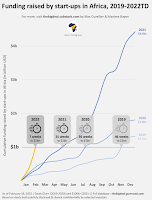
    While I agree with the authors of Morgan Stanley's newsletter that many investors are missing out on lucrative opportunities in Africa, there is evidence this is changing. As reflected in the chart at the top of this post, African startups raised $4.4 billion in 2021, which was more than 2.5 times the amount raised in the previous year, according to "Africa: The Big Deal," a website managed by Max Cuvellier and Maxime Bayen.

    With respect to specific sectors, fintech startups raised $2.3 billion from investors last year (see chart below). While this sector captured 53% of funds raised, other key sectors such as energy, retail, healthcare, education, and logistics and transportation are also on the rise.


    I do not completely believe the notion that institutional investors in America or Europe are investing in African startups because they see the market as a great investment opportunity. Their investment is a result of chasing higher yields since the average junk-bond yields in America and Europe are 5.1% and 3.3%, respectively, well below inflation. And while there is good reason to cheer the recent increases in investments on the continent and the revenues some of these startups are reporting, I am still waiting for announcements of profitability and successful exits through an initial public offering or acquisition. Nevertheless, as someone who has supported tech startups in Africa for over 20 years, I am optimistic that the trend in the number of investors, amount raised, and overall number of startups on the continent will continue to grow for years to come.

    I look forward to future conversations with government leaders in Africa on how to reduce their reliance on commodities by investing in education and infrastructure. Such investments will only help their growing working-age population enjoy the fruits of a middle-class lifestyle.

    What opportunities and risks are you seeing in Africa's startup ecosystem?

    Aaron Rose is a board member, corporate advisor, and co-founder of great companies. He also serves as the editor of GT Perspectives, an online forum focused on turning perspective into opportunity.

    October 30, 2021

    The EIU Presents Its Ten Risk Scenarios That Could Impact Global Growth and Inflation in 2022

    "We expect the post-pandemic recovery to continue in 2022, with global GDP expanding by 4.1%," according to a paper published by The Economist Intelligence Unit (The EIU). "However, this rebound will mask great variations in the pace of recovery across different regions. In addition to this baseline outlook, we are also tracking a host of scenarios that could derail the post-pandemic recovery and have an effect on global business operations." Through this paper, The EIU aims to summarize some of these key risks that could impact global growth and inflation.

    Below are The EIU's top ten global risk scenarios for 2022:
    1. Worsening US-China ties force a full decoupling in the global economy;
    2. An unexpectedly fast monetary tightening leads to a US stockmarket crash;
    3. A property crash in China leads to a sharp economic slowdown;
    4. Tighter domestic and global financial conditions derail the recovery in emerging markets;
    5. New Covid-19 variants emerge that prove resistant to vaccines;
    6. Widespread social unrest weighs on the global recovery;
    7. Conflict erupts between China and Taiwan, forcing the US to intervene;
    8. EU-China ties worsen significantly;
    9. Severe droughts prompt a famine; and
    10. An inter-state cyberwar cripples state infrastructure in major economies.


    The EIU explains that it tracks "these risks and score them in terms of probability (how likely are they to happen?) and impact (if they happen, how great is the impact on businesses?)." Furthermore, the UK-based organization combines "these probability and impact scores to produce an intensity rating to support our clients in their ongoing risk monitoring requirements, helping them to answer the question, 'how worried should we be?'. Below is a snapshot of scores for our ten global risk scenarios."


    Worsening US-China ties force a full decoupling in the global economy is a risk scenario that concerns me the most. As The EIU explains:
    The US and China are vying for global influence. The US president, Joe Biden, is trying to convince "like-minded" (mostly Western) countries to collaboratively put pressure on China. This has included restrictions in the areas of trade, technology, finance and investment, along with sanctions, forcing some markets (and companies) to choose sides. Although most evident in the technology arena, there is a risk that this strategy will encompass industrial or consumer-facing sectors. In an extreme scenario, this could lead to a neutral stance becoming economically prohibitive for third countries, dividing China-supporting and US-supporting economies. Full global economic bifurcation would force companies to operate two supply chains with different technological standards. Implementation of 5G telecommunications networks could be postponed in some countries, and sanctions by China would heighten uncertainty surrounding global trade and investment.
    Unexpectedly fast monetary tightening leads to a US stockmarket crash is another risk scenario that I am watching closely. The EIU points out that "Supply-chain disruptions, higher energy prices, ultra-loose monetary policy and a recovering real economy have all contributed to a sharp uptick in US inflation in 2021." The paper adds that "Although many of these factors are likely to ease as the US economy rebalances post-pandemic—indicating that spiking inflation will not be long-lasting—they nonetheless give cause for the Federal Reserve (Fed, the central bank) to start tightening monetary policy gradually by tapering its asset purchases. However, if slow and clearly signaled monetary tightening fails to rein in inflation in the medium term, a rise in interest rates by mid-2022 may be necessary." Moreover, "Given that US stock price/earning ratios are currently higher than before both the 1929 and the 2007-08 crashes, accelerated interest-rate increases could be enough to initiate a sharp stockmarket adjustment. The high number of retail investors means that falling stock prices would weigh heavily on consumer spending, possibly halting the US economic recovery and risking a recession."


    And those who live or hold business interests in emerging markets should be mindful that tighter domestic and global financial conditions could derail the recovery in these markets. The EIU says "Inflationary pressures stemming from rebounding commodity prices have already led some emerging markets, including Brazil, Mexico, Russia, Sri Lanka and Ukraine, to raise monetary policy rates in 2021." What is more, "In a context where sovereigns have grown increasingly leveraged as a result of the pandemic, interest-rate normalization will feed into higher debt-service costs for governments. This could ratchet up pressure for aggressive pro-cyclical fiscal consolidation that ultimately sets back the recovery of emerging countries. In particular, the potential for US bond yields to rise faster than expected in the coming months could drive higher emerging-market risk premiums, leaving them vulnerable to sudden drops in capital inflows." The paper crucially notes that "[r]isks will be especially elevated in countries where indebtedness in foreign currency is particularly high, for example in Argentina and Turkey, where bond sell-offs could trigger currency and/or debt crises."

    Which risk scenarios concern you the most? What strategies are you employing to make your company resilient should any of these risks materialize? 

    Aaron Rose is a board member, corporate advisor, and co-founder of great companies. He also serves as the editor of GT Perspectives, an online forum focused on turning perspective into opportunity.

    February 26, 2019

    EIU Report Lists the Possibility of a US-China Trade Conflict Morphing Into a Full-Blown Global Trade War as Its Top Risk in 2019

    "The outlook for the global economy is worsening," asserts The Economist Intelligence Unit (The EIU). "Given concerns over slowing growth in key economies, including China and the EU, and the wider impact of a trade war between the US and China, The Economist Intelligence Unit expects global growth to decelerate from 2.9% in 2018 to 2.8% in 2019 and 2.6% in 2020. However, even when taking into account this downbeat assessment, there remain a number of risks emanating from three key areas that could drive growth even lower than we currently forecast in 2019-20."

    In its latest report, The EIU identifies and assesses the top ten risks to the global political and economic order. Each of the risks is outlined and rated in terms of its likelihood and its potential impact on the global economy.

    Source: The Economist Intelligence Unit

    1. A US-China trade conflict morphs into a full-blown global trade war (Moderate risk; Very high impact; Risk intensity = 15)

    "China and the US have started negotiations to resolve the current trade dispute, and the US government has decided to suspend further increases in tariffs on US$200bn-worth of Chinese goods. Talks are likely to yield a limited trade deal—involving Chinese purchases of US agricultural and energy products, but with only broad commitments to domestic economic reform, particularly over structural issues, including technology transfer and intellectual property. While this will avoid an escalation in tensions for now, a full-blown trade war between the US and China remains a significant risk to the global economy, owing mainly to the fact such a deal will lack the necessary enforcement measures to ensure Chinese commitment to the structural reforms demanded by US negotiators. Moreover, beyond bilateral protectionism, there remains a risk that trade conflicts will escalate on additional fronts in the coming years, to the extent that global trade could actually decline, with major knock-on effects for inflation, business sentiment, consumer sentiment and, ultimately, global economic growth."

    2. US corporate debt burden turns downturn into a recession (Moderate risk; High impact; Risk intensity = 12)

    "Falling consumer sentiment and manufacturing activity indicators highlight the worsening outlook for the US economy as it faces the effects of a trade war with China, the impact of a lengthy government shutdown in December-January and an eventual turn in the business cycle. Nonetheless, the economy’s fundamentals remain fairly robust, with economic growth at an estimated 2.9% in 2018, and inflation slowing to 1.9% year on year in December, despite gradually rising wage growth. In addition, the Federal Reserve (the central bank) moved to a more cautious approach to monetary policy in early 2019. Therefore, although we expect economic growth to slow to 2.3% in 2019 and to just 1.5% in 2020, our central forecast is that the US will avoid a damaging recession in 2019-20."

    3. Contagion spreads to create a broad-based emerging-markets crisis (Moderate risk; High impact; Risk intensity = 12)

    "Many emerging markets suffered currency volatility in 2018, primarily as a result of US monetary tightening and the strengthening US dollar. In a few instances, such as Turkey and Argentina, a combination of factors, including external imbalances, political instability and poor policymaking, led to full-blown currency crises. More recently, however, the pressure on most emerging markets' capital accounts has eased, as the US Federal Reserve has adopted a more cautious monetary policy stance. Nonetheless, market sentiment remains fragile, and pressure on emerging markets as a group could re-emerge if market risk appetite deteriorates further than we currently expect."

    4. China suffers a disorderly and prolonged economic downturn (Low risk; Very high impact; Risk intensity = 10)

    "In China, a shift towards looser macroeconomic policy settings is under way as a result of the escalating trade conflict with the US. This will support domestic demand in the short term, but in the process previous goals of lowering unsold housing stock and corporate deleveraging are receiving less emphasis. There is a risk that, in the government’s efforts to support the economy, policy missteps will be made."

    5. Supply shortages lead to a globally damaging oil-price spike (Low risk; High impact; Risk intensity = 8)

    "Market fears of oil-supply shortages have eased since the US granted six-month sanction waivers to eight of the key purchasers of Iranian oil in December. Along with higher output from Saudi Arabia and Russia, and global growth concerns, this has caused the price of dated Brent Blend to fall to close to US$60/barrel, compared with highs of over US$80/b in September. However, the risk of major supply disruptions remains."

    6. Territorial or sovereignty disputes in the South or East China Sea lead to an outbreak of hostilities (Low risk; High impact; Risk intensity = 8)

    "The national congress of the Chinese Communist Party in October 2017 was a milestone in terms of China’s overt declaration of its pursuit of great-power status, setting the goals for China to become a 'leading global power' and have a 'first-class' military force by 2050. The president, Xi Jinping, is keen to develop China's global influence, probably sensing opportunity during a period of US retrenchment. How China intends to deploy its expanding hard-power capabilities in support of its territorial and maritime claims is a source of growing concern for other countries in the region."

    7. Cyber-attacks and data integrity concerns cripple large parts of the internet (Moderate risk; Low impact; Risk intensity = 6)

    "Public, corporate and government faith in the internet as a source for global good is under strain. Revelations of major data breaches across a range of social media, and the use of that data for propaganda, are likely to see social media companies facing tighter regulation in the coming years. Meanwhile, cyber-attacks continue apace. In March 2018 the US blamed Russia for a cyber-attack on its energy grid. At a similar time there was a sustained attack on German government networks. Although these attacks have been relatively contained so far, there is a risk that their frequency and severity will increase to the extent that corporate and government networks could be brought down or manipulated for an extended period."

    8. There is a major military confrontation on the Korean peninsula (Very low risk; Very high impact; Risk intensity = 5)

    "There was a pick-up in diplomatic activity on the Korean peninsula in 2018, peaking with a historic summit in June between Mr Trump and the North Korean leader, Kim Jong-un, in Singapore. Decades of carefully planned approaches between the US and North Korea have failed, but there is a glimmer of hope that a more improvised and personal approach by two unorthodox leaders could make progress, with a second meeting between the two scheduled for late February. However, we maintain the view that there are irreconcilable differences between the US and North Korea on both the pace and the breadth of denuclearization."

    9. Political gridlock leads to a disorderly no-deal Brexit (Low risk; Low impact; Risk intensity = 4)

    "Although a withdrawal agreement between the EU and the UK was finalized at an EU summit on November 25th, it was initially rejected by UK members of parliament in a vote in mid-January, and only received parliamentary backing in a later vote on condition that the Irish border backstop be renegotiated. (The backstop stipulates that the UK would remain in a customs union with the EU indefinitely should a trade agreement preserving an open Irish border not be found.) However, the EU has so far rejected any reopening of withdrawal agreement negotiations. With so little room for maneuver before the March 29th deadline, we think that the UK prime minister, Theresa May, will be forced to delay Brexit by requesting an extension of the Article 50 window."

    10. Political and financial instability lead to an Italian banking crisis (Low risk; Low impact; Risk intensity = 4)

    "After positive growth in the preceding 14 quarters, the Italian economy contracted in both of the final quarters of 2018, constrained by a mixture of domestic political and economic uncertainty, tightening liquidity conditions and the worsening global trade outlook. In the light of this, we expect real GDP growth to slow from 0.8% in 2018 to just 0.2% in 2019. There is, however, a risk of a much deeper recession should investor confidence lead to another spike in bond yields."

    Source: The Economist Intelligence Unit

    Which risks provide the greatest concern to you or your business?

    Aaron Rose is an advisor to talented entrepreneurs and co-founder of great companies. He also serves as the editor of Solutions for a Sustainable World.

    December 9, 2018

    The Mobile Economy Will Generate $200 Billion of Economic Value in the MENA Region by 2022

    A report published by PwC says the Middle East and North Africa (MENA) region is young, with over 40% of people under 25. Furthermore, PwC asserts that youth unemployment in the region is among the highest in the world at 28%.

    While it does not generate the headlines on the nightly news in the United States, many governments in the MENA region understand it must cut public expenditures by reducing the number of people on the public payroll. Some government officials in the region also recognize the important role a thriving private sector will play in helping young people find jobs. Not only will a growing private sector ease governmental budgetary pressure, but it will produce additional tax revenue.

    Therefore, as my colleagues and I seek business and investment opportunities in the MENA region's information and communications technology sector, we read with great interest The Mobile Economy: Middle East and North Africa 2018. Produced by GSMA Intelligence, the research arm of London, England-based GSMA, the report presents four key points.

    Subscriber growth slowing, but growth potential remains

    "By mid-2018, there were 381 million unique subscribers across the Middle East and North Africa (MENA) region, accounting for 64% of the population. Despite annual subscriber growth of 4% on average over the last four years, MENA remains the second least penetrated region in the world. There is, however, significant variation among countries in the region, from the advanced Gulf Cooperation Council (GCC) Arab States where 77% of the population on average are mobile subscribers, to Other Arab States such as Comoros, Djibouti and Somalia where subscriber penetration is around 30%."

    The report importantly points out that "between 2017 and 2025, the MENA region will see the fastest subscriber growth rate of any region except Sub-Saharan Africa, growing above the global average at a CAGR of 2.5% to reach 459 million. By this time, 69% of the population will be mobile subscribers, only slightly behind the global average of 71%."

    Mobile contributing to jobs and economic growth

    It is the report's second point that I found most valuable with respect to the future potential of the region's ICT sector. According to the GSMA, "In 2017, mobile technologies and services generated 4% of GDP in the MENA region, a contribution that amounted to just under $165 billion of economic value added. By 2022, the mobile economy in the region will generate around $200 billion of economic value added as countries continue to benefit from the improvements in productivity and efficiency brought about by increased take-up of mobile services."

    The report crucially explains that "the mobile ecosystem supported more than 1 million jobs in 2017. This includes workers directly employed in the ecosystem and jobs indirectly supported by the economic activity generated by the sector.

    "In addition to the impact on the economy and labor market, the mobile sector also makes a substantial contribution to the funding of the public sector, with more than $17 billion raised in 2017 in the form of general taxation."

    Advanced MENA markets at the forefront of innovation

    With respect to 5G technology, the report notes: "Some mobile operators, particularly those in some of the GCC Arab States, are seeking to be global leaders in 5G deployments, and are pushing ahead with tests and trial launches ahead of commercialization as early as 2019. These markets will exhibit relatively rapid 5G rollout, with adoption reaching 16% of total connections by 2025, slightly above the global average."

    "Enhanced mobile broadband will be the key use case in early 5G deployments in the region, while applications and services for enterprises are tested and then introduced. There also exists a significant addressable market for 5G-based fixed wireless services, particularly in those countries with limited fiber penetration. In the enterprise space, there is broad agreement from MENA operators on the key industry verticals where 5G can deliver the greatest long-term value, including smart cities, utilities, mining and tourism."

    What is more, "While the potential is clear, long-term monetization may require greater maturity of the 5G ecosystem – particularly for the more innovative and mission-critical services, such as autonomous vehicles and certain smart city applications. Key to this will be industry-wide collaboration and innovation centers, where companies from different sectors can experiment with the 5G ecosystem to develop new products and services."

    On the topic of Internet of Things (IoT), the report says "the number of IoT connections across the MENA region will triple between 2017 and 2025, reaching 1.1 billion. Currently, the consumer and industrial IoT segments have equal shares of total IoT connections, but industrial IoT is where most of the growth will take place due to an increase in smart utilities, smart retail and smart city deployments."

    Moreover, IoT revenue in the MENA region will increase at an average annual rate of 19% to 2025 to reach $55 billion. Applications, platforms and services account for the largest share of IoT revenue and will grow further as mobile operators continue to deploy different strategies and business models to move beyond offering connectivity only."

    The report also discusses the topic of digital identity in that "the MENA region has exhibited rapid uptake of digital trade, driven by growth in mass connectivity and mobile device penetration, and more recently by advances in the provision of digital identity. Consumers are increasingly demanding to access services securely, shielded by robust privacy safeguards and strong data protection delivered by digital identity capabilities. To this end, Mobile Connect is a secure universal log-in solution which, by matching the user to their mobile phone, allows them to log-in to websites and applications quickly without the need to remember passwords and usernames, and with no personal information shared without permission. Turkey is a key market for Mobile Connect: Turkcell, for example, uses the solution for its Fast Login authentication application, and is hoping to develop additional services that will form the basis of new revenue streams."

    Realizing the potential of a digital society

    I concur with the report's authors that "public policy and regulation are key factors in the spread of mobile-enabled services across the MENA region. By setting the right regulatory context, governments can create incentives for mobile operators to continually upgrade and expand mobile services in the region. The GSMA encourages governments across MENA to review and recalibrate telecoms policy to advance the digital transformation and to reflect new market dynamics. Three key areas require close attention:
    • Fostering a transparent and stable licensing framework that promotes a high quality of service and encourages investment; and
    • Aligning mobile sector taxation with national ICT objectives so as not to create obstacles to investment or consumer adoption; and
    • Creating a spectrum roadmap to meet future demand for mobile services.

    What role does the MENA region play in your business or investment strategy?

    Aaron Rose is an advisor to talented entrepreneurs and co-founder of great companies. He also serves as the editor of Solutions for a Sustainable World.

    December 2, 2017

    Political Risk Will Hang Heavily Over Corporate Investment Decisions in 2018

    Each year The Economist Intelligence Unit (The EIU) issues a report forecasting how six industry sectors (automotive, consumer goods and retail, energy, financial services, healthcare, and telecoms) will develop globally over the coming year. Industries in 2018 highlights how traditional business models are likely to come under strain amid sweeping changes, many driven by technology. It also highlights how, despite continued global economic growth, companies will need to remain flexible and be wary of political risks, particularly in the European Union (EU).

    The EIU report begins by asserting: "Traditional business models will come under strain amid sweeping changes, many driven by technology. Despite the decent economic conditions, political risk will hang heavily over investment decisions."

    Furthermore, "This year's report, which gives our forecasts for 2018, highlights how old ways of making money are fast going out of fashion. Perhaps the starkest example of this is in retailing, where online selling is dramatically disrupting the traditional shopping culture. That industry is not alone. Telecoms companies are facing new challenges from technology players, heightening already fierce competition, while established players in carmaking and energy are struggling to adapt to the rise of clean technologies. Pharmaceutical companies face pricing and patenting dilemmas, while regulators are redoubling pressure on financial services companies."

    From a business strategist perspective, I support the report's assertion that "companies will need to shake up their business models in 2018 to respond to these pressures. However, planning is easier than execution. New regulations, new competitors and new consumer demands will emerge during the year ahead in many markets, while the business environment will develop in ways that may be hard to predict."

    What is more, according to The EIU, "High levels of political risk will also complicate matters in each of our six industries: automotive; consumer goods and retail; energy; financial services; healthcare; and telecoms. At least global economic conditions will not be bad—although not quite as good as in 2017."

    Lastly, the report importantly notes:
    Although White House policies continue to concern many companies in our six industries, the threat of a damaging trade war has receded since our 2017 report as geopolitical and business realities win out. Even so, global trade growth will decline from 4.6% in 2017 to 3.5% in 2018, mainly owing to a slowdown in China's economy. Political risks will remain strong, particularly in the EU: as Brexit edges nearer, the risk that the negotiations will break down remains high. In 2018 companies will need to remain flexible enough to deal with such risks, while also seizing the opportunities presented by continued global growth.
    Do you agree that political risk will hang heavily over corporate investment decisions in 2018?

    Aaron Rose is an advisor to talented entrepreneurs and co-founder of great companies. He also serves as the editor of Solutions for a Sustainable World.

    August 17, 2017

    Global Economic Growth in 2017 is as Good as it Gets

    On July 27, 2017, The Economist Intelligence Unit (The EIU) held a webinar, "The world economy in the age of Trump," which focused on the global outlook for 2017-18. Presented under the title of "Good Economics, Bad Politics: The Global Outlook for 2017-18" by The EIU's John Ferguson, Director of Global Forecasting, and Mike Jakeman, Global Economist, the webinar focuses on the United States outlook along with the main regional forecasts that present the most significant risks to the global economy.

    Mr. Jakeman begins by noting global growth will accelerate in 2017 and the world's economy is looking at its healthiest in years. In other words, the global economy is seeing its best performance since before the 2007-08 financial crisis. For example, the U.S. is experiencing close to full employment as gross domestic product (GDP) is expected to rise to 2% in 2017.

    In addition, the eurozone, the monetary union of 19 of the 28 European Union (EU) member states which have adopted the euro as their common currency and sole legal tender, is growing steadily.

    Many emerging markets will be stronger in 2017, Mr. Jakeman said. With 6.8% economic growth in China, 2017 is proving to be a good year for the world's second largest economy. Brazil and Russia are also seeing economic growth this year with both countries no longer experiencing an economic recession.

    However, risks, notably political, exist that may stymie the resent global economic upswing. Mr. Jakeman notes that U.S. President Donald Trump's impulsive behavior to weaken domestic institutions, which is threatening American democracy, and his disrespect for old alliances and prioritizing commerce over diplomacy could create headwinds for the global economy.

    In addition, the webinar claims "thuggish authoritative leaders" such as Russia's Vladimir Putin (overt anti-Westernism, tight controls ahead of Russia's 2018 elections, and meddling of US election), Turkey's Recep Tayyip ErdoÄŸan (shift to executive presidency that will keep him in power until 2029), and the Philippines' Rodrigo Duterte (7,000 dead in war on drugs, dissenting voices marginalized, and a state of emergency), are invoking policy or implementing actions that may derail positive global economic growth.

    Turning his attention specifically to the U.S., Mr. Jakeman said there are certain priorities set before Congress. Tax cuts will take time, but deregulation is happening now. Healthcare has been a mess for decades and will probably remain so, according to the webinar. As for tax reform, personal and tax cuts are coming rather than comprehensive reform of the United State Internal Revenue Code.

    Mr. Jakeman then explained that "Trumpism will not transform the economy. Fiscal surge could help temporarily, but growth of 4% will be out of reach." He also noted how productivity growth has halved in the U.S. from 2005-2015 compared to the period of 1995-2005. Moreover, a slower labor force growth will prevent the Trump administration of reaching its 2016 campaign promise of achieving 4% GDP growth. Mr. Jakeman notes tax cuts for the rich leads to saving, not spending (wealthy have lowest marginal propensity to spend) and any rapid growth of the U.S. economy will be inflationary, which the Federal Reserve would lift rates in response to curtail such rapid growth.

    Disappointingly, The EIU webinar projects the U.S. economy will experience a recession in 2019. "Only two quarters of contraction, but enough to bring growth down to 1%."

    Focusing on Europe, Mr. Ferguson said economic recovery is taking hold in the eurozone. "Tentative signs of recovery are building. Unemployment is falling, euro is rising, and growth revised up to 1.9% in 2017." However, Europe is "never far from a crisis." Brexit negotiations, Grexit, Italian debt, and the election of populist candidates may adversely impact Europe's economic growth in the next few years.

    Regarding the Middle Kingdom, China's politics will supersede economic reform in 2017 as a result of the 19th National Congress of the Communist Party of China to be held later this year in Beijing. According to Mr. Ferguson, China's rise of GDP of recent time has been fueled by debt. For example, China's private non-financial sector credit as a percentage of GDP is at an alarming level of 200%, which is proof that the country's debt dynamics are unsustainable. As a result of "a policy-induced managed slowdown" by the Chinese government, The EIU projects a continuing deceleration of China's economy with GDP falling from 6.8% this year to 4.6% in 2018.

    "In summary, 2017 is as good as it gets," Mr. Ferguson said. "First China and then the U.S. will exert downward pressure on the global economy." Emerging countries like India, Iran and Russia (despite sanctions imposed on Russia by Australia, Canada, EU, Japan, and the U.S.) will continue to see economic growth, while Qatar will experience economic decline given the political crisis the country is facing from its Middle East neighbors.

    Do you agree with the information presented in this webinar? How will your business be affected if the U.S. experiences an economic recession in 2019 or China sees a deceleration of economic growth in the next couple of years?

    Similar to investing in public equities of buying on the low, businesses should consider expanding to new markets that are experiencing an economic recession or deceleration. Doing so will provide an ample opportunity for taking advantage of the rewards that will materialize when the economy returns to growth.

    Aaron Rose is an advisor to talented entrepreneurs and co-founder of great companies. He also serves as the editor of Solutions for a Sustainable World.

    December 30, 2016

    'Despite an Improved Global Economic Backdrop, Mounting Uncertainties Will Weigh on Companies in 2017'

    Image: EIU
    "In 2017, companies can look forward to an improved global economic backdrop but must prepare for uncertainty following Donald Trump's victory in the US presidential elections and the UK's decision to leave the EU," explains the Economist Intelligence Unit in announcing the publication of its whitepaper, Industries in 2017. "This exclusive whitepaper provides a global overview for the year ahead for six industries - Automotive, Consumer goods, Energy, Financial services, Healthcare, and Telecommunications. It brings together analysis and forecasts for each industry, identifying the key strategic business issues that we expect to arise."

    Regarding the general overlook for the global economy in 2017, "Threats to global economic growth are mounting. Populist, anti-globalization sentiment has triggered Donald Trump's election in the US and Britain's planned exit from the EU. Yet, despite the raised risks, the world economy is in fact set for a slightly better year in 2017."

    Many emerging markets will benefit from "a firmer outlook for commodities." The EIU predicts "that average prices of Brent crude oil will climb by a quarter on 2016, to US$56.5/barrel; non-oil commodity prices will tick up for the first time in years. Beneficiaries will include Russia and Brazil, both recovering from recessions. This will speed economic expansion in the non-OECD world to 4.3% at market exchange rates. The OECD will see a smaller acceleration to 1.8%, while global growth will rise to 2.5%."

    As for the U.S. economy, the EIU's forecast "is a sunny one, with GDP rising by 2.3%. Although we expect faster monetary tightening by the Federal Reserve, the central bank, this may be offset by Mr Trump’s promised tax-cuts and infrastructure spending. However, if Mr Trump pushes ahead with protectionist trade policies, he could undermine US and world growth."

    While the Federal Reserve will tighten monetary policy, other countries in the advanced world will see their monetary policy "remain overwhelmingly loose." The EIU notes that "governments will also turn to fiscal policy to stimulate demand. In Japan, for example, the prime minister, Shinzo Abe, is throwing yet more stimulus at the economy and the fiscal deficit is set to widen. Meanwhile, debt-laden China will avoid a sharp slowdown in 2017 (not so in 2018), as Asia grows by a healthy 3.9%."

    It its overview of the global economy in 2017, the whitepaper correctly explains: "Europe will once again let the side down, thanks partly to Brexit. The consequences of the UK's decision to leave the EU will be long-lasting, profound and clouded in uncertainty. As consumer and business sentiment in the world's fifth-biggest economy sag, recession will ensue in 2017. Europe will manage only 1.4% growth. With important elections in France and Germany to come in 2017, the fear is that the forces ranging against globalization will gain further ground."

    Listed below is the central thesis for each of the six industries addressed in whitepaper:
    • Automotive. With the auto industry facing widespread challenges, the focus on research and development has intensified. But will traditional vehicle-makers lose out as mobility becomes more high-tech?
    • Consumer goods/retail. Political events may dampen consumer confidence in 2017 but new technologies will continue to drive global retail sales upwards;
    • Energy. Climate policies will keep chipping away at fossil fuels' role as the mainstay of global energy use, despite Donald Trump's appointment as US president in 2017;
    • Financial services. Finance will enjoy boosts in 2017 from fintech, mobile money, an emerging market rebound and expanding customer ranks. However, the three villains of the post-crisis era—weak growth, low rates and tough regulations—will keep a damper on the sector;
    • Healthcare. Plenty of countries will be trying to expand access to healthcare, but the US may step back from Obamacare; and
    • Telecoms. Telecoms companies will seek new sources of revenue as traditional streams dwindle and pressure from growing mobile broadband usage mounts.
    Do you agree with the EIU's forecasts for 2017? What key issues and trends are valuable to your business?

    Wishing you a happy, healthy, and prosperous 2017. Thank you for reading.

    Aaron Rose is a board member, corporate advisor, and co-founder of great companies. He also serves as the editor of GT Perspectives, an online forum focused on turning perspective into opportunity.